


A single-edge straight razor avoids the below-surface cutting that triggers chronic razor bumps and irritated necklines. Pairing it with a tailored men's style cut leaves skin calm and gently exfoliated, without cartridges tugging coarse hair beneath the surface. We cover more in our post on women's haircuts.
Your curl pattern and skin sensitivity help determine which shaving method fits. Time matters too: at-home blade adjustments, electric rotary shavers, and professional straight razor services each demand a different routine. One sharp edge cuts at skin level, preserving the skin barrier while shaping a neckline that stays neat.
What's Inside This Guide
- Shaving Methods and Skin Irritation Compared
- Matching the Blade Method to Hair and Skin Type
- Evaluating Blade Mechanics: Benefits and Trade-Offs
- Maintenance Schedules and Expense Tiers
- Safety Considerations and Skin Prep Essentials
- Steps to Choose the Right Neckline and Shave Strategy
- Questions Westlake Village Clients Ask About Razor Bumps
- Plan Your Grooming Reset in Westlake Village
Shaving Methods and Skin Irritation Compared
Cartridge razors use a process called hysteresis: the first blade lifts each hair, and the next blades cut below the skin. Once the hair pulls back, coarse or curly strands can turn inward, causing ingrown hairs and painful swelling. Straight razors avoid that tension by cutting at the skin's surface.
Video: How to Prevent and Treat Razor Bumps | Barber Guide to Skincare & Client Aftercare (CADMEN BARBER ACADEMY)
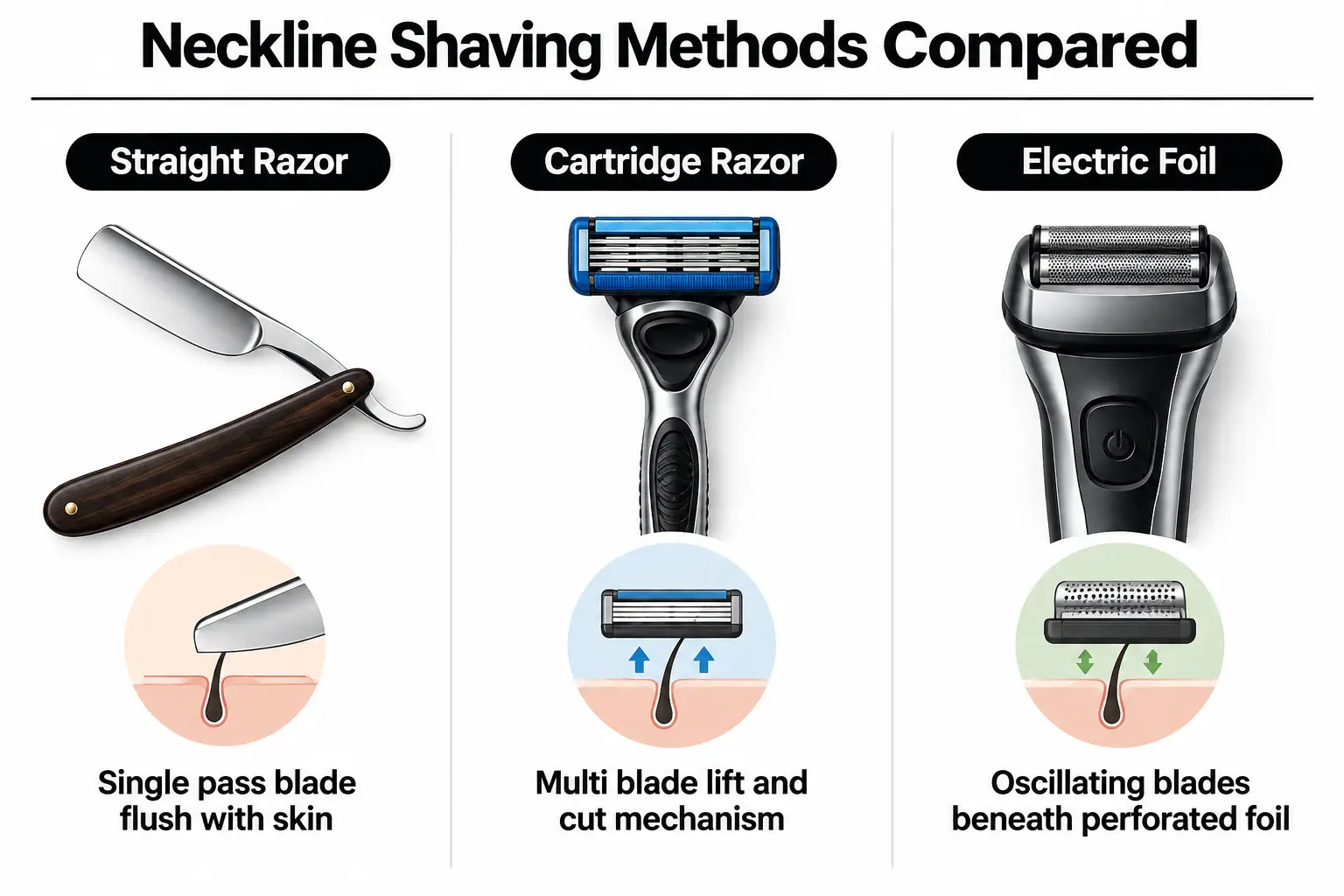
| Shaving option | How it works | Results last | Upkeep needed | Downtime |
|---|---|---|---|---|
| Classic straight razor | One surface-level pass over steamed skin | 3 to 5 days smooth | Weekly or every other week | None; redness eases right away |
| Cartridge shaving | Multiple blades lift and cut below the skin | 1 to 2 days | Daily or every other day | Recurring irritation |
| Foil or rotary shaver | Cuts hair between moving blades and an outer guard | 1 day | Every 24 to 48 hours | Slight surface heat |
| Single-blade safety razor | Weighted home-use handle with a guarded flat blade | 2 to 3 days | Every 3 to 4 days | Little with good technique |
Adding professional blade work to your regular men's haircut prevents the uneven neckline and patchy stubble left by rushed shaving with dull blades. According to the American Academy of Dermatology, changing your blade angle and making fewer passes reduces pseudofolliculitis barbae, the condition commonly called razor bumps.
Matching the Blade Method to Hair and Skin Type
Beard texture changes how skin responds to shaving. Coarse, tightly curled hair needs thorough softening and very little friction. Fine, straight hair tolerates closer upkeep at home without curling back into the follicle wall. Knowing what your skin tolerates helps you avoid irritation you don't need.
| Skin or hair concern | Better shave approach | Why it helps |
|---|---|---|
| Curly or coarse neck hair | Classic hot towel straight razor | Hot towels soften keratin, the protein in hair, so the blade doesn't pull |
| Active razor bumps | Clipper edge-up only until skin calms | Gives raised bumps time to settle before a close shave |
| Dry, flaky skin | Hot lather straight razor service | Gently removes dead skin buildup while adding rich moisturizers |
| Sensitive skin that flushes easily | Single-pass straight blade | Avoids multi-blade friction that strips protective skin oils |
During your cut, we can check growth swirls and cowlicks so your neck taper works with your shave. Stubborn swirls need particular attention to the direction of growth. An appointment for styling and shampoo helps set up healthy skin care and easier daily styling at home.
Evaluating Blade Mechanics: Benefits and Trade-Offs
Each tool has limits. The choice is how close you want to shave without asking more of your skin than it can tolerate.
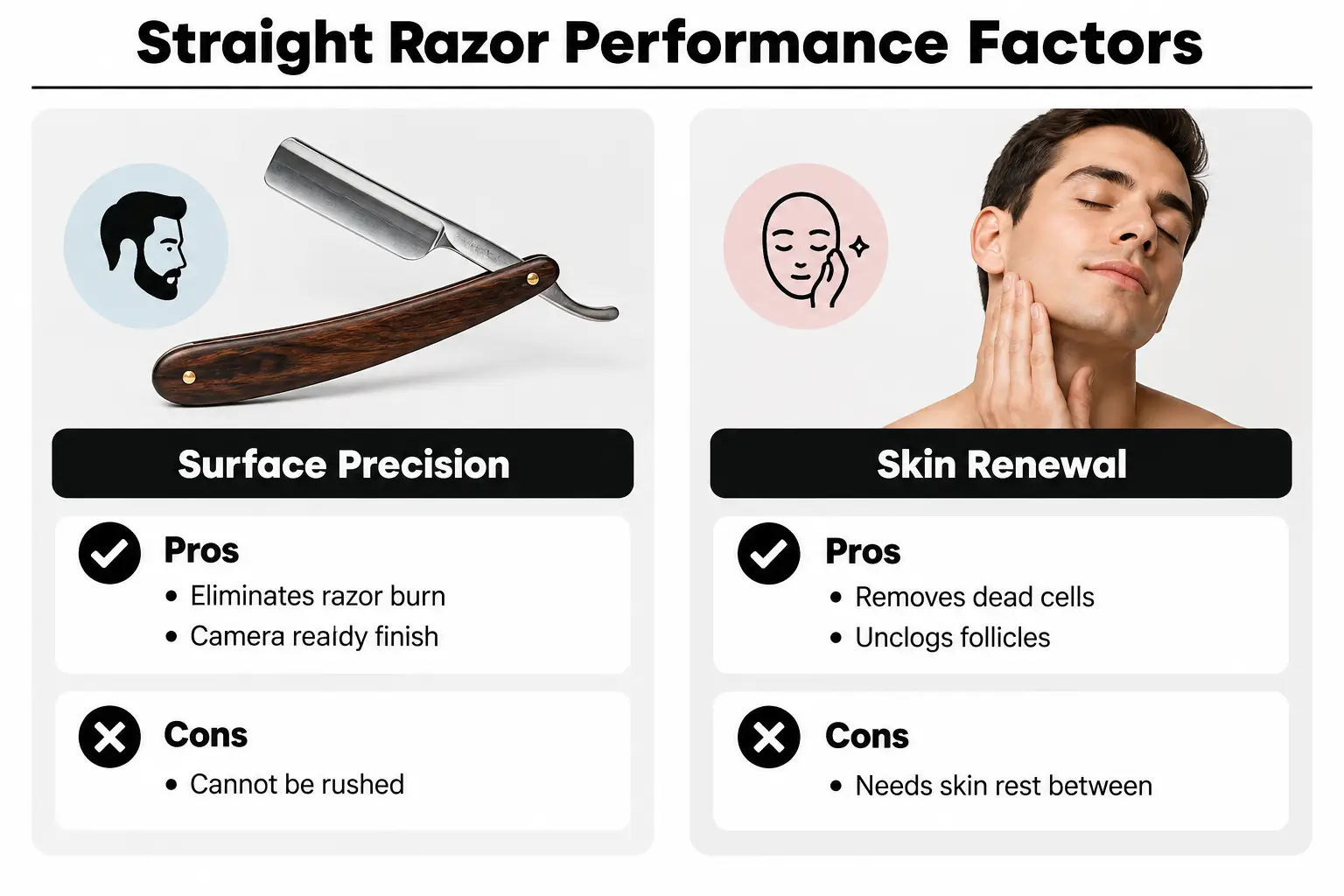
- Professional straight razor: Gives a close finish without cutting below the skin and removes dead skin as it goes. It takes skilled hands, though, and isn't something to rush in five morning minutes.
- Multi-blade cartridges: Quick and convenient for busy mornings, but the trailing blades cause tiny friction tears in the skin that worsen razor bumps.
- Electric rotary shaver: Simple to use on dry skin, though it often misses neck stubble that lies flat and pulls coarse whiskers.
- Traditional safety razor: Offers an affordable single-edge shave at home. Awkward neck angles still make it easy to nick yourself or leave patches behind.
Cutting a whisker at the surface with one sharp edge leaves no buried tip to curl back into the pore.
Many men around Westlake Village want quality haircuts at affordable prices that include attention to scalp care and facial lines. Pairing the two gives them the neat, professional finish they want without the irritation of drugstore blades.
Maintenance Schedules and Expense Tiers
Keeping a steady routine helps your neck and jaw heal. Skin needs time to recover between shaves, especially if bumps keep returning. Spacing out blade work also helps prevent a flare-up just before a work presentation or private event.
- Professional straight razor maintenance: Recommended every 2 to 3 weeks, along with your haircut ($$). This keeps the edges neat and removes dead skin buildup before unruly regrowth starts tangling.
- At-home single-edge touchups: Every 4 to 5 days ($). You'll need a balanced, weighted handle and good shaving soap. Replace the blade every 3 to 4 shaves.
- Cartridge maintenance: Replace cartridges weekly ($$$). The ongoing cost adds up, especially alongside soothing balms bought to deal with recurring irritation.
- Electric trimmer edge-ups: Weekly ($). After buying the device, ongoing costs are very low. The trade-off is visible shadow and coarse stubble rather than a smooth finish.
Before a speaking engagement or family event, a full grooming service makes a visible difference to your presentation. Book a hot face shave house call or a lounge visit for a clean finish without last-minute shaving nicks.
Safety Considerations and Skin Prep Essentials
Keep straight razors away from sunburned skin or infected follicles with pus-filled bumps. Inflamed, open cysts along the neck need time to settle before close blade work. Tell your stylist about topical retinoids or prescription acne treatments: they thin the stratum corneum, the outer skin layer, and increase sensitivity.
Before the blade: Never shave your neck with a dry blade. Apply moist heat for three full minutes to soften facial hair before the first pass.
Choose a salon that uses single-use disposable blades and follows state sanitation rules, such as those from California's barbering and cosmetology board. Browse our services or talk with us about skin concerns before your appointment.
Steps to Choose the Right Neckline and Shave Strategy
Before booking, look at the direction your facial hair grows and the condition of the skin beneath it. Those two details tell us more than how close you usually shave. Use these steps to choose the safest approach for your neck.
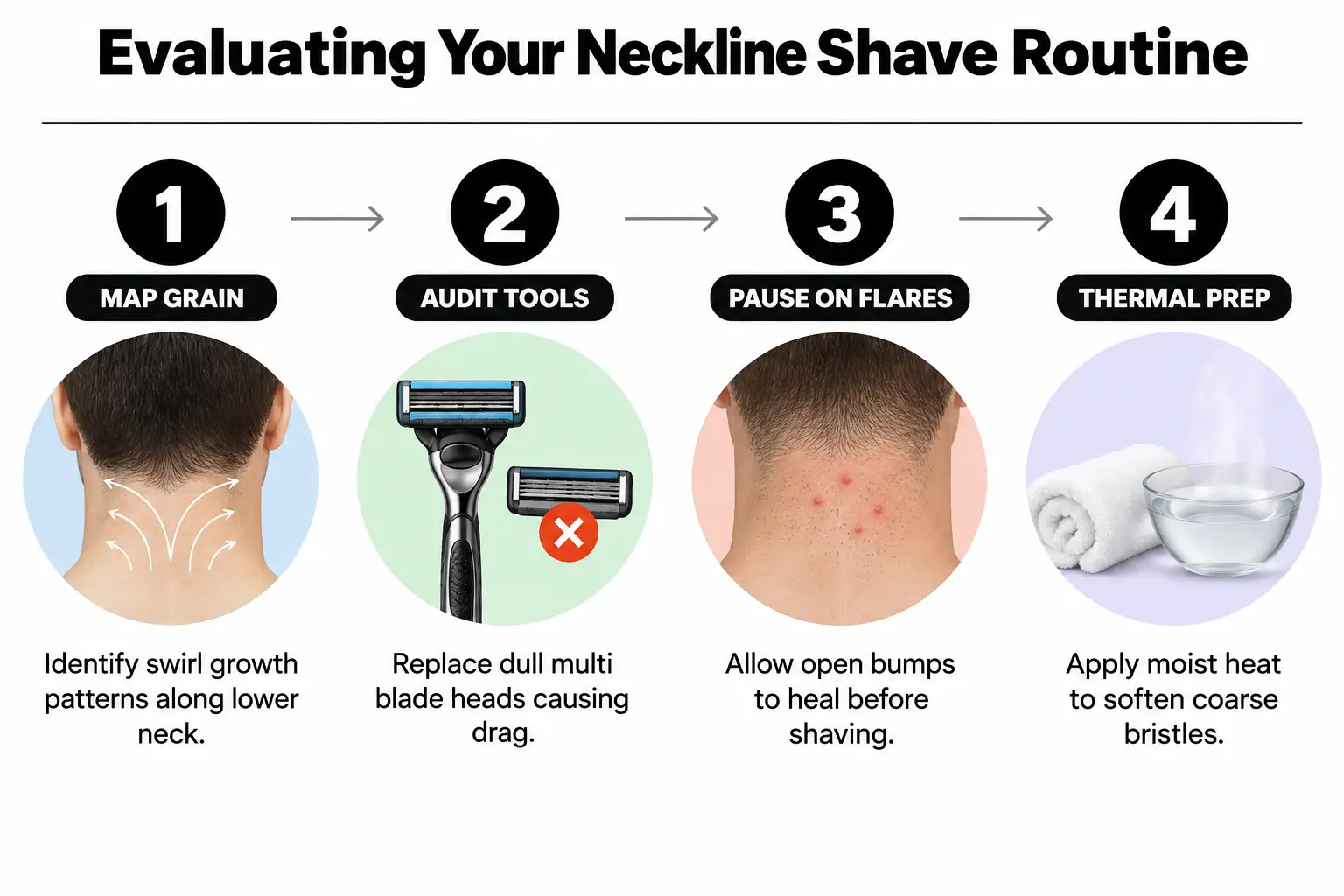
- Check your grain direction: Look at your neck in the mirror after two days of growth. Hair often swirls along the lower neck, so a downward pass may go against the grain.
- Check your tools: Throw out multi-blade cartridges you've kept for weeks. Dull steel bends coarse hair rather than cutting it cleanly.
- Give skin time to heal: For inflamed bumps, book a precise taper with scissor trimming around the edges. Let the skin beneath settle before shaving it closely.
- Discuss your head and jaw shape: Ask us where your neckline should sit to suit your jaw. It shouldn't creep unnaturally high just to make the edges look tidy.
- Finish with cooling aftercare: Press a cold towel against the skin after shaving to close pores. Follow with an alcohol-free, plant-based moisturizer to keep moisture in the skin barrier.
A family visit for a child's haircut can include time for your own grooming, too. Matching your haircut to your facial lines helps the whole profile look neat, rather than treating the neck and hair as separate jobs.
Questions Westlake Village Clients Ask About Razor Bumps
Why does a straight razor cause fewer ingrown hairs than cartridge razors?
Straight razors cut hair flush with the skin in one clean pass. Cartridge blades pull hair up before cutting it, so the cut end can slip beneath the surface. That buried tip can then curl inward.
How do hot steamed towels prevent post-shave irritation?
Moist heat from steamed towels opens pores and softens keratin, the protein in facial hair, by up to sixty percent. Softer hair offers less resistance to the blade, so it glides without pulling or dragging sensitive skin.
Can I get a straight razor shave if I currently have active razor bumps?
Postpone blade work if bumps are open, bleeding, or infected. We can trim carefully around the flare-up with clippers while the area settles. Once the skin barrier recovers, we can use a razor again.
How often should I get my neck cleaned up with a straight razor?
Every two to three weeks is ideal for most men. That timing fits normal hair growth and keeps the neckline neat without removing too much surface skin or stressing the delicate neck area.
Does a classic straight shave help with dead skin cell buildup?
Yes, a single edge gently removes dead skin along with facial hair. It lifts cells from the outer skin layer, helping clear blocked pores and brighten skin that looks dull.
Plan Your Grooming Reset in Westlake Village
At North Ranch Styling Lounge, we balance the shape of your haircut with careful attention to your skin. A custom men's style cut paired with straight razor detailing addresses recurring neckline irritation while keeping your everyday look neat. The haircut and shave should work together, with skin health guiding the blade work.
Contact our Westlake Village team to book a grooming appointment tailored to your skin and neckline.