

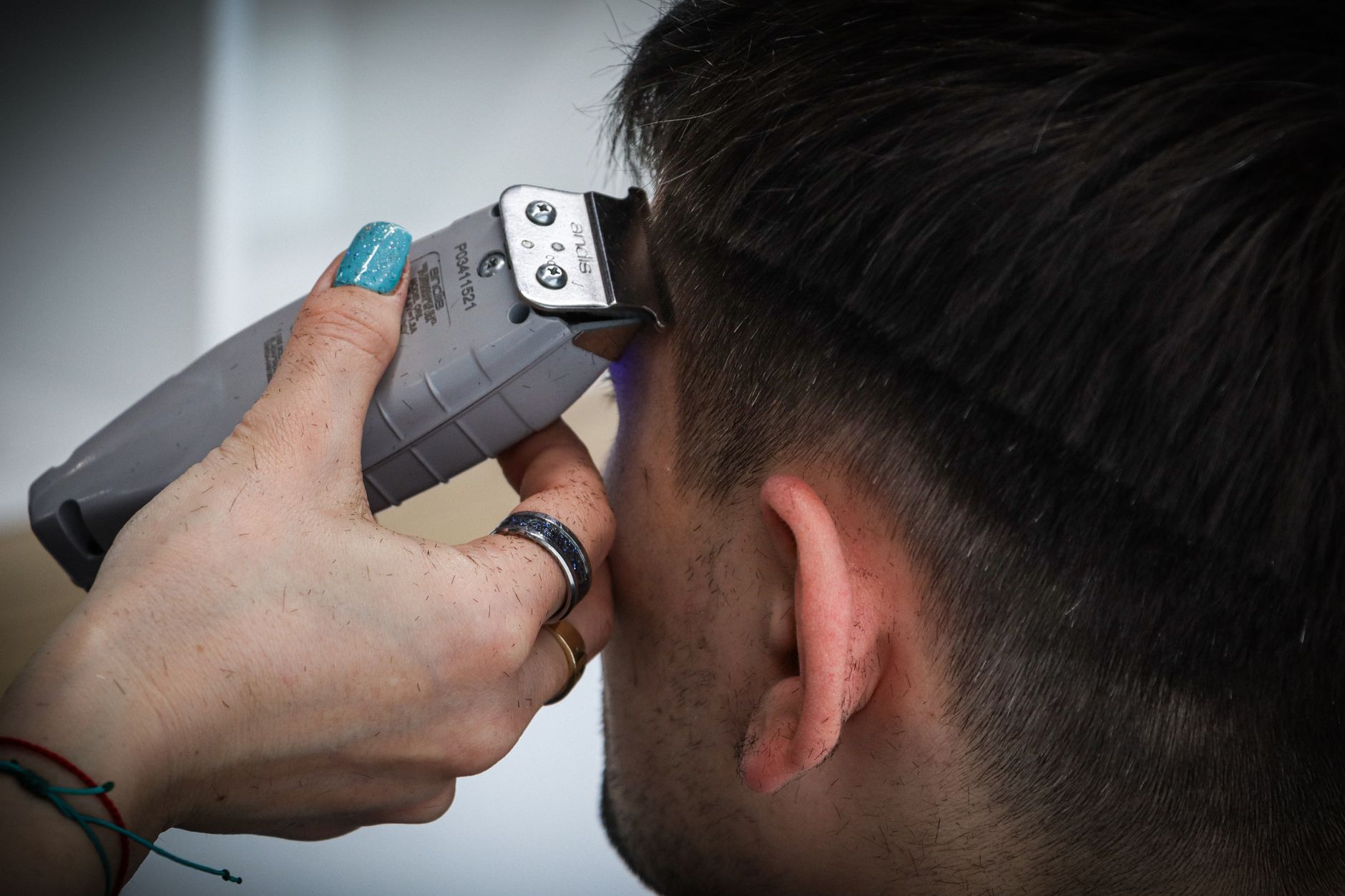
For a neck that stays irritated after shaving, blade choice comes down to friction and how deep the razor cuts. Multi-blade cartridges use a hysteresis mechanism: the first blade pulls hair outward so the next blades can cut below the skin. That below-surface cut frequently leads to ingrown hairs.
Using a dedicated single-edge blade alongside a regular beard trim keeps your borders neat while preventing tiny skin tears. Those tears can trigger persistent folliculitis, or inflammation around the hair follicles.
Single-edge tools cut flush with the skin rather than leaving a sharp hair tip beneath the pore. Watch what happens after your daily shave. Clusters of red, inflamed bumps on your neck forty-eight hours later point to the multi-blade cartridge as the likely cause.
What's Inside This Guide
- Mechanical Differences Across Shaving Tools
- Matching Blade Mechanics to Skin Sensitivity and Hair Texture
- Evaluating Daily Friction and Edge Control
- Maintenance Rhythms and True Cost Expectations
- When to Pause Clean Shaving and Transition to Perimeter Trimming
- Navigating Your Setup During a Studio Consultation
- Common Queries Regarding Blade Choice and Neck Irritation
- Refining Your Daily Edge in Westlake Village
Mechanical Differences Across Shaving Tools
Blade position makes the difference between a plastic cartridge and a classic single-edge razor. Cartridges hold three to five thin metal strips inside a bulky head with a plastic guard. They work quickly, but each stroke draws several sharp edges across the stratum corneum, your skin's fragile outer layer.
Video: A quick safety razor and cartridge razor comparison (geofatboy)
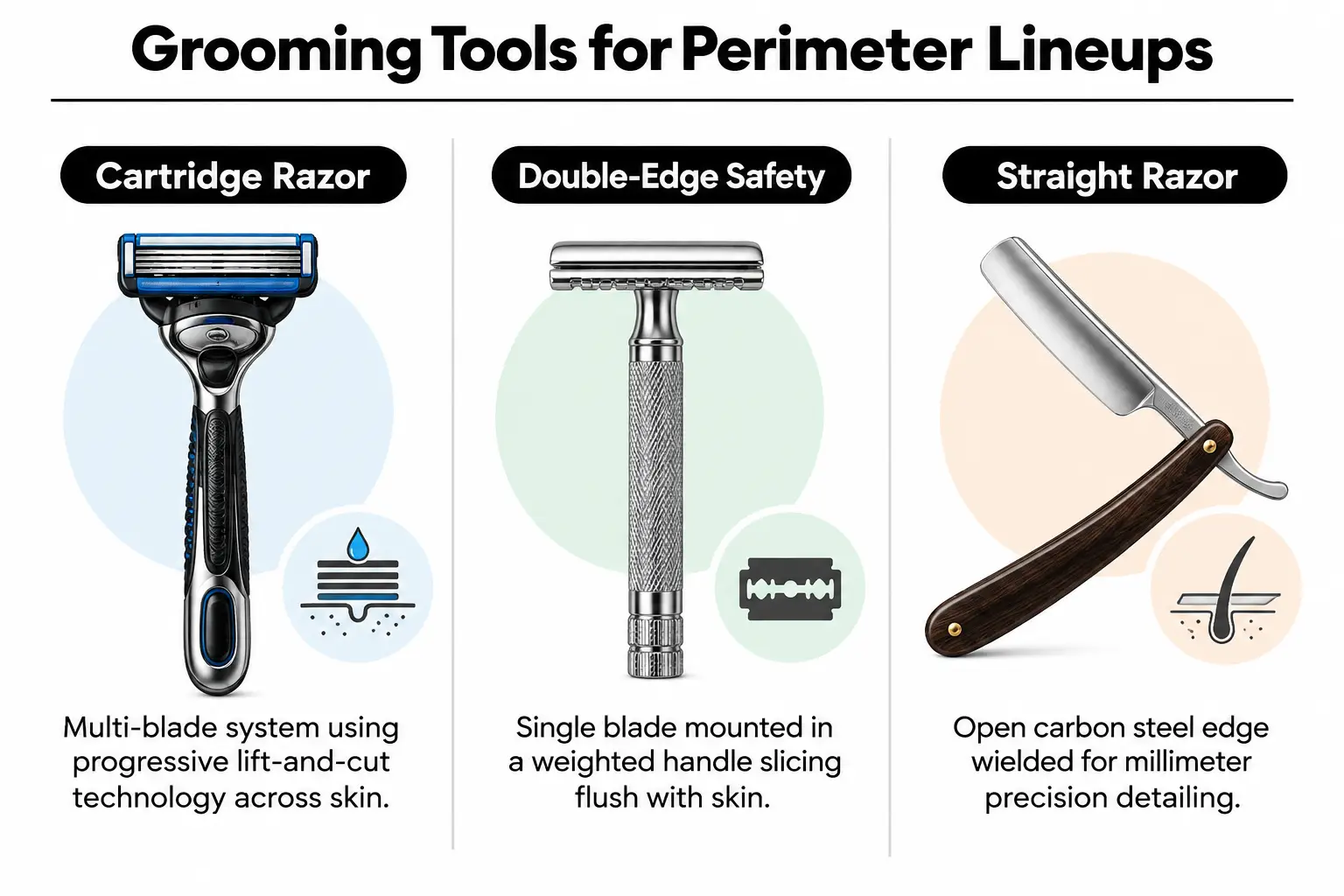
Four passes with a five-blade cartridge send twenty blades over the same patch of irritated neck skin.
Traditional safety razors and the straight razors we use during service rely on one very sharp cutting edge. Held at an exact thirty-degree angle, that blade removes stubble at the pore's boundary without scraping the surrounding skin cells.
| Shaving Option | How It Works | Results Last | Upkeep | Downtime |
|---|---|---|---|---|
| Multi-blade cartridge | First blade lifts the hair; following blades cut below the skin's outer layer | 24 to 36 hours | Replace disposable heads every week or two | Immediate redness lasting 4 to 12 hours |
| Double-edge safety razor | One exposed blade passes against the skin at a controlled thirty-degree angle | 24 to 48 hours | Replace standard recyclable double-edge blades every 4 to 6 uses | No downtime once you have learned the technique |
| Barber straight razor | Hand-sharpened steel edge passes over warmed skin, held taut by the barber | 48 to 72 hours | Professional appointment every two to three weeks | None, with pre-shave hydration and a cold towel afterward |
| Precision electric trimmer | Moving teeth cut hair just above the skin without touching the pore | 12 to 24 hours | Clean blades and oil teeth weekly | None, making it ideal during active flare-ups |
Ordinary razors can leave your neck too raw to keep a clear border. Using a single blade at home alongside regular beard trim and treatment appointments keeps that line well defined without damaging the skin.
Matching Blade Mechanics to Skin Sensitivity and Hair Texture
Hair direction and density differ from one neckline to the next. Coarse hair, especially curly or wiry growth, carries the highest risk of razor bumps, called pseudofolliculitis barbae. Cut below the surface, a curved hair curls inward as it grows and pierces the pore wall. Your body treats it as a foreign object and reacts with inflammation.
| Skin or Hair Concern | Better Option | Why |
|---|---|---|
| Coarse, curly facial hair | Single-edge safety razor | Leaves a blunt cut at skin level so the curled tip cannot slip back beneath the pore wall. |
| Thin, reactive skin with rosacea | Zero-gap trimmer or single blade | Reduces friction. Cartridge razors pull at the outer skin layers, causing flushing that lasts. |
| Awkward whorls and cowlicks | Straight razor lineup | Allows full control as hair changes direction across the lower neck. |
| Dry, flaking neck skin | Single blade with rich lather | Canned drugstore foam dries skin. Artisanal soap and a single blade preserve its protective oil barrier. |
For men looking for an affordable beard lineup, dropping plastic multi-blade cartridges is often enough to clear irritation. Our guide to fixing chronic razor bumps with a classic straight razor explains how a single blade's cutting angle affects your skin over time.
Evaluating Daily Friction and Edge Control
Each shaving tool asks you to trade some convenience for control. Drugstore multi-blade handles make a quick morning cleanup easy, but their design puts speed ahead of how your skin feels afterward.
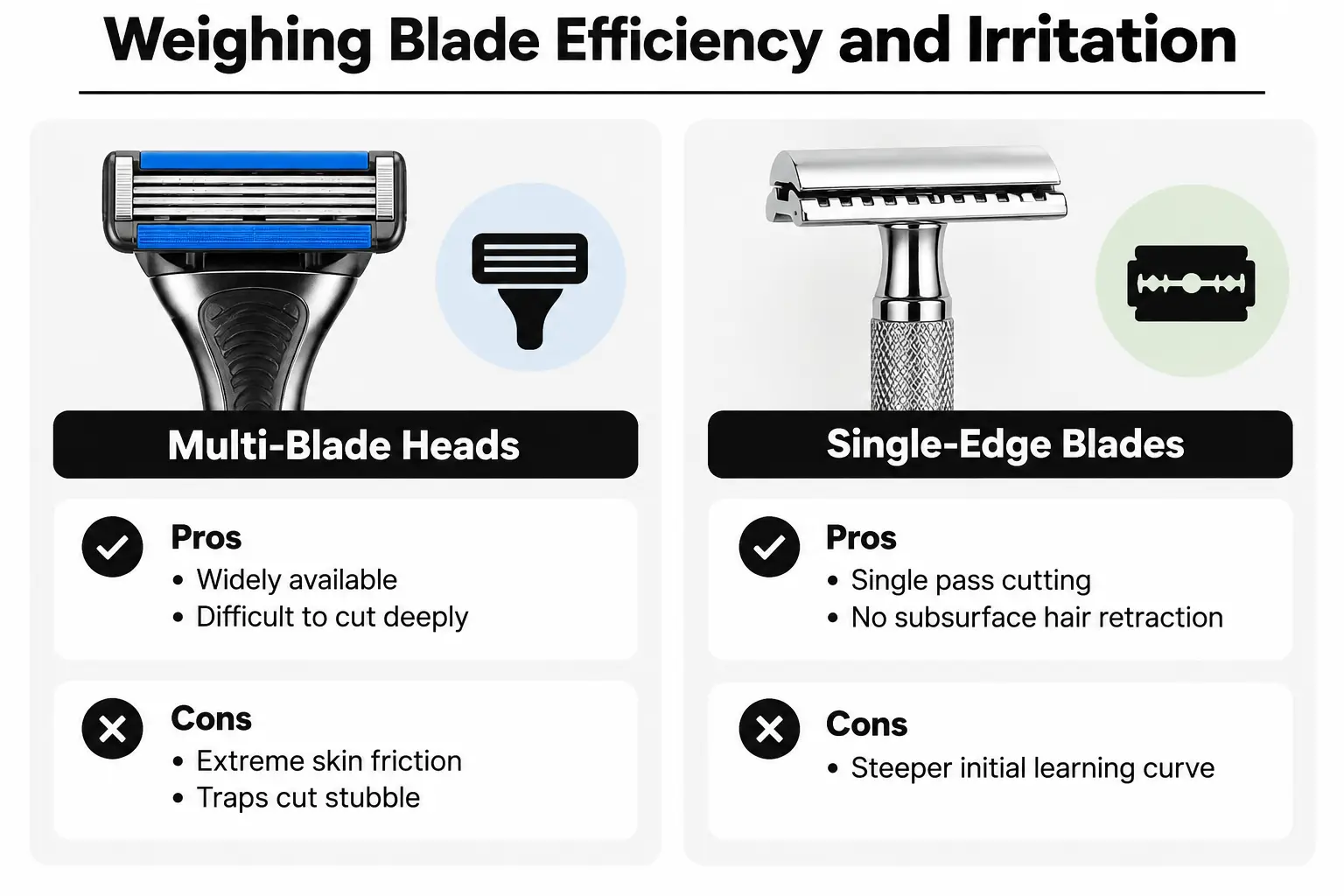
- Multi-blade cartridges: Pivoting heads let you shave quickly with little risk of deep nicks. But dull edges drag, thick hair clogs them immediately, and bacteria collect in narrow plastic gaps.
- Double-edge safety razors: Solid stainless steel gives a very sharp cut with little drag across the skin. Getting the hand balance and angle right takes practice.
- Professional straight blades: These give the sharpest beard borders and precise cheek lines. Safe use depends on steady hands and regular studio appointments.
- Electric edging tools: These make dry cleanup quick and leave no risk of ingrown hairs. They do leave stubble rather than the glass-smooth finish you might want for a formal event.
Clients who come to us for beard trimming and shaping often learn that metal allergy was never causing their razor burn. The pulling action of a multi-blade head was responsible.
Maintenance Rhythms and True Cost Expectations
Think about replacement costs as well as the price of the handle. A safety razor costs a modest amount upfront, while fresh blades cost very little. Cartridge refills carry steep retail markups. That expense tempts many people to keep using a dull head for weeks past its intended life.
Dull blades make you press harder against your neck, the main cause of razor burn. As you compare the price of beard shaping appointments with your home kit, the costs fall into three basic groups:
- Safety razor routine ($): A brass or stainless steel handle lasts a lifetime, and replacement double-edge blades cost pennies each. Replace the blade every five shaves to keep up with routine maintenance.
- Cartridge system ($$): The handle is inexpensive, but replacement heads soon add up. Most users keep one cartridge for a month, dragging dull blades clogged with hair over sensitive neck skin.
- Home and professional care ($$$): Use a safety razor for basic daily cleanup, with salon visits every two weeks. A professional trim defines the jawline and cleanly removes stubborn neck growth.
Professional beard shaping and home maintenance need to fit the same budget. A good local barbershop will encourage you to use clean, inexpensive single blades between appointments. There is little reason to pay more for plastic cartridges that grow dull while you stretch out their use.
When to Pause Clean Shaving and Transition to Perimeter Trimming
Sometimes any wet blade does more harm than good. During bacterial folliculitis, an infection around the hair follicles, shaving over affected spots spreads germs to clean pores. The same risk applies to open cuts or active cystic breakouts along the jaw.
Switch to dry electric clipping just above skin level until the area settles down. Clean your tools with isopropyl alcohol after every use.
Stylist's rule: Never run a multi-blade razor over raised, active razor bumps. Use clippers while the hair grows clear of the surface, then reset your borders with a single edge after the redness disappears completely.
Wetting hair before shaving and following its natural growth direction protect the skin's outer barrier from repeated tiny injuries. That advice comes from the American Academy of Dermatology's shaving guidance.
Navigating Your Setup During a Studio Consultation
You do not have to guess how to shape your neck and cheek borders. An experienced stylist can check hair density and growth direction under natural light, including areas that react easily. At North Ranch Styling Lounge, we use your studio consultation to review the routine you follow at home:
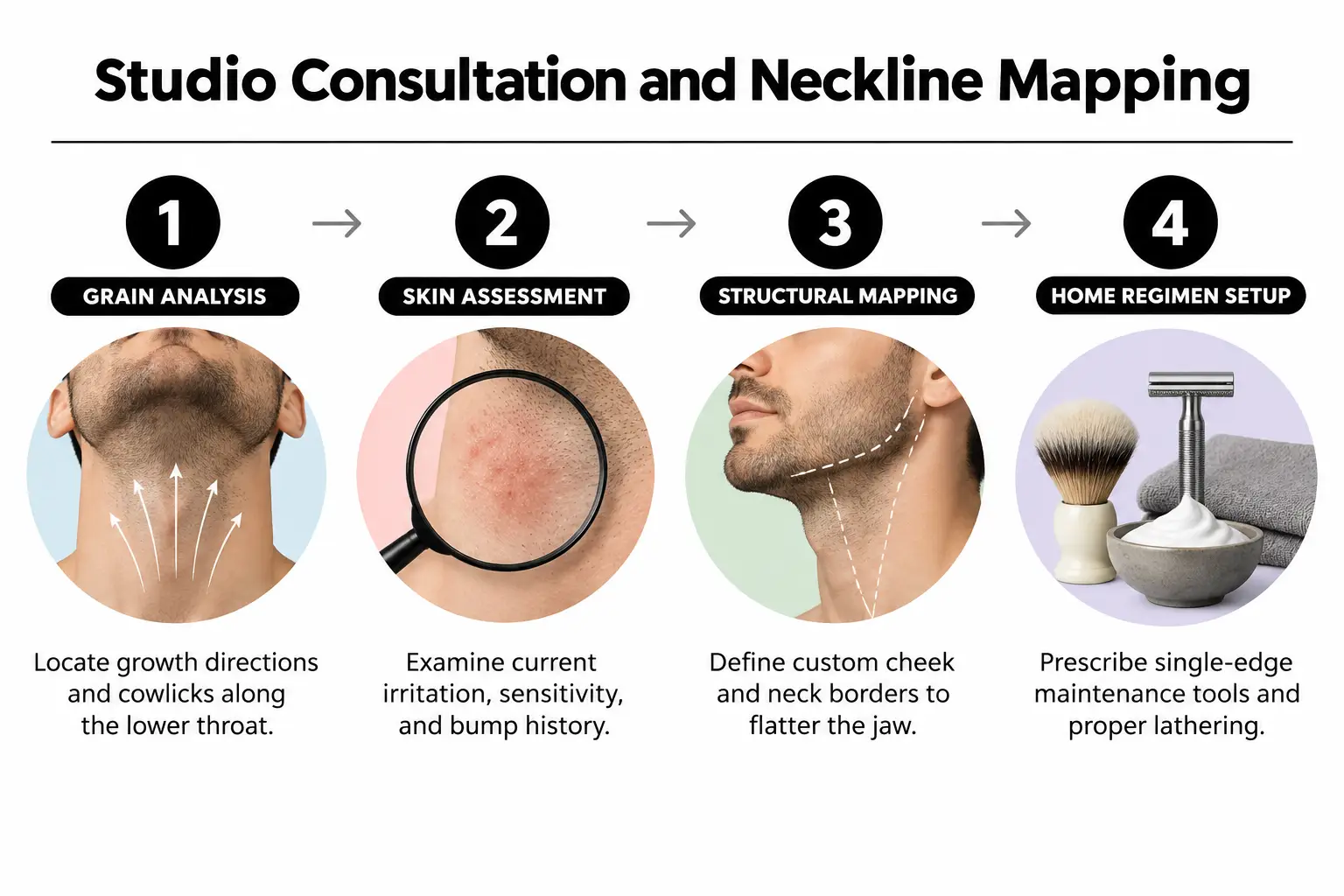
- Mapping growth direction: We follow the natural swirls across your neck and show you exactly which direction each patch of hair grows.
- Checking your skin: Current redness or dryness, along with scars from past shaving, helps us choose your next step. Your skin may need electric trimming before a gentle single blade.
- Planning your borders: Your face shape guides the trim. We place the neckline to balance your jaw rather than cutting it too high into the chin.
- Choosing home tools: Together, we review the razors and lathers in your cabinet. Our advice covers where to replace multi-blade cartridges with a single edge for better control.
- Scheduling maintenance: Before you leave, we plan your next visit. Trimming can be paired with our scalp facial and oxygen treatment or massage and wellness therapies to reduce skin inflammation.
Finding a local team with beard-trimming experience gives you a place to work through these choices. A consultation takes the painful trial and error out of dealing with recurring razor bumps.
Common Queries Regarding Blade Choice and Neck Irritation
Why do multi-blade cartridges cause more ingrown hairs than single blades?
Cartridges use a lift-and-cut design. Their first blade grips and pulls the hair outward, then the following blades cut it below skin level. After the cut, the hair slips back beneath the pore opening. It curls sideways into the tissue and forms an inflamed razor bump.
Can I achieve clean lines using only a single blade?
Yes, one blade lets you see the cutting point better than a wide cartridge head does. With a straight or safety razor, you can set the edge directly on your guide mark. That control keeps the borders even and sharply defined without taking off more than you intended.
How do I determine the best beard shape for weak jawline profiles?
Placing the neckline slightly below your natural jaw makes it look deeper and more angular. Keep the cheek lines natural, then taper the neckline with a single blade. The clear lower border frames your jaw without losing that natural cheek shape.
Is haircut and beard trim combo pricing available for routine upkeep?
Yes, booking your haircut and beard service together makes upkeep easier and keeps your sideburns consistent with your beard fade. Our groom packages show how combining those services saves time and money.
How often should I book a beard sculpting appointment to maintain clean lines?
Most men do well with a studio appointment every two to three weeks. This timing keeps stray hairs in check as the cheeks and chin grow at different rates. It also lets us refresh the neck taper before the borders start to soften.
Refining Your Daily Edge in Westlake Village
Neck sensitivity calls for tools that suit your skin. At North Ranch Styling Lounge, our grooming services help men in Westlake Village, California move away from irritating drugstore razors. We choose the approach around your skin rather than asking you to work around the tool.
Our team can establish a beard shape or balance areas where growth is uneven. We also offer restorative hair botox treatments alongside grooming services, with the same careful attention we give your trim.
To plan a trim for your neckline and skin, contact us to schedule a consultation.