

The most reliable way to shape uneven jaw stubble is a hot face shave with gradual fading at the edges, rather than blunt trimming at home. Hair growing at different speeds makes a clean outline harder to maintain. For fine, sensitive skin or sparse chin corners, a high, harsh border usually makes the gaps stand out.
At our lounge, we see clients every week who trimmed an uneven patch at home and took the neckline too high. Letting the stubble grow untouched for five days before your visit gives us enough growth to reset the outline.
What's Inside This Guide
- Why Hacking Away at Home Stubble Distorts the Jawline
- Choosing Between Bare-Skin Edging and Density-Fading Lines
- Matching Edge Sharpness to Natural Bone Structure
- Pairing Edge Geometry with Haircut Tapers and Skin Health
- The Six-Step Jaw Calibration Protocol
- Balancing Upkeep Frequency and Investment
- Questions Westlake Village Clients Keep Asking
- Plan Your Jawline Reset in Westlake Village
Why Hacking Away at Home Stubble Distorts the Jawline
Uneven facial hair growth is normal, with most men growing thicker hair on the chin and mustache than along the sides of the jaw. Using a multi-blade cartridge razor on dry, patchy stubble can leave wavy borders. Those crooked lines hide your natural jaw definition, especially in wedding photos or other camera work.
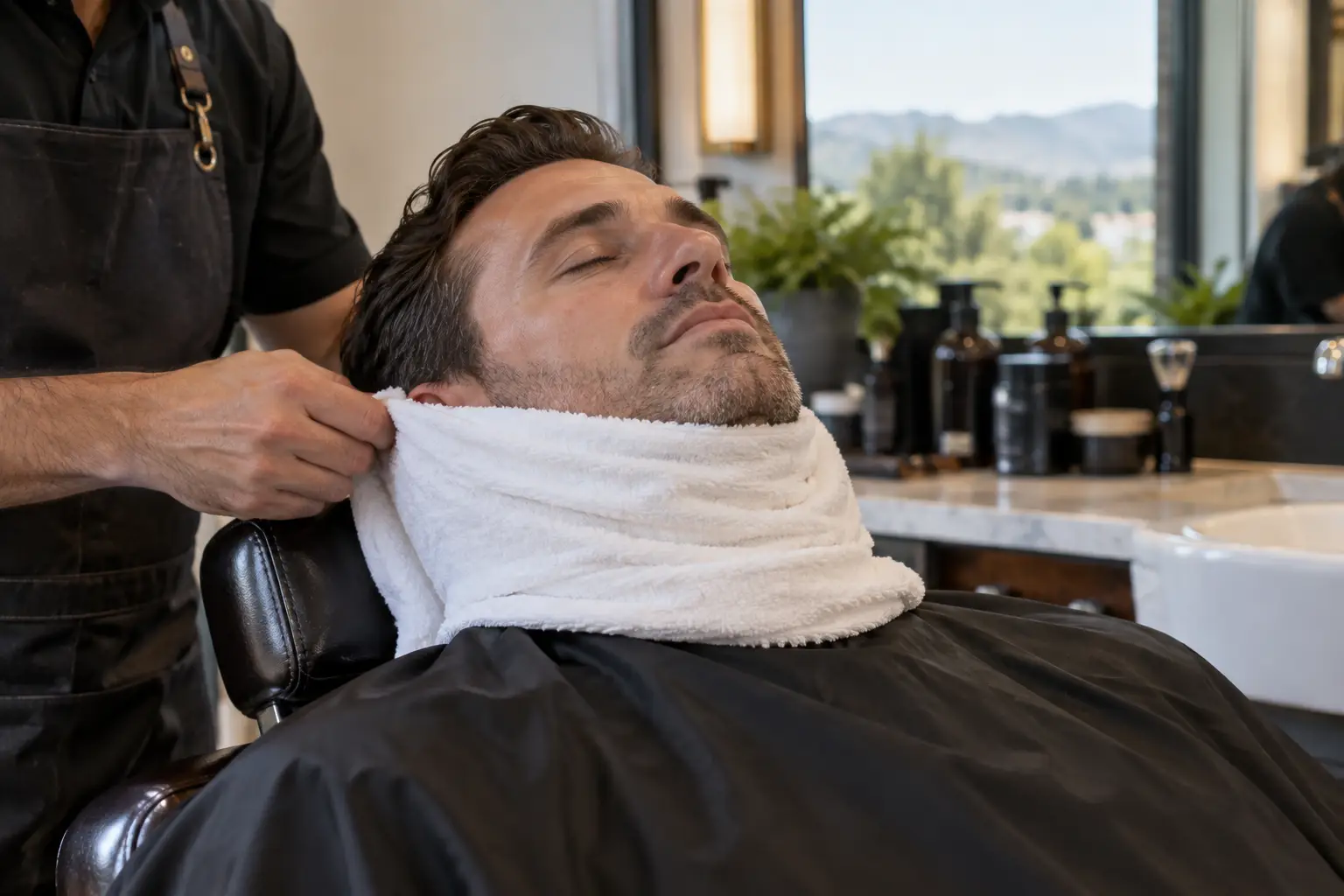
Multi-blade razors pull hairs outward before cutting, which often causes bumps on delicate neck skin. Our explanation of pre-shave steaming and stubble pulling covers why preparation matters if your skin flares up each time you shape your jaw.
Stylist check: Keep your beard neckline away from the crease of your jawbone. Setting it two fingers above the Adam's apple leaves a natural shadow and avoids a double-chin effect.
The anatomy reference from the National Institutes of Health explains the mandible, or lower jawbone, whose angle shapes facial shadows. Cutting into that natural border immediately makes the jaw look less defined.
Choosing Between Bare-Skin Edging and Density-Fading Lines
Once you sit down, our first choice is how your stubble should meet bare skin. A sharp line across the jaw is not always the right fit, particularly where your hair grows at different thicknesses.
Defining the Boundary Strategy
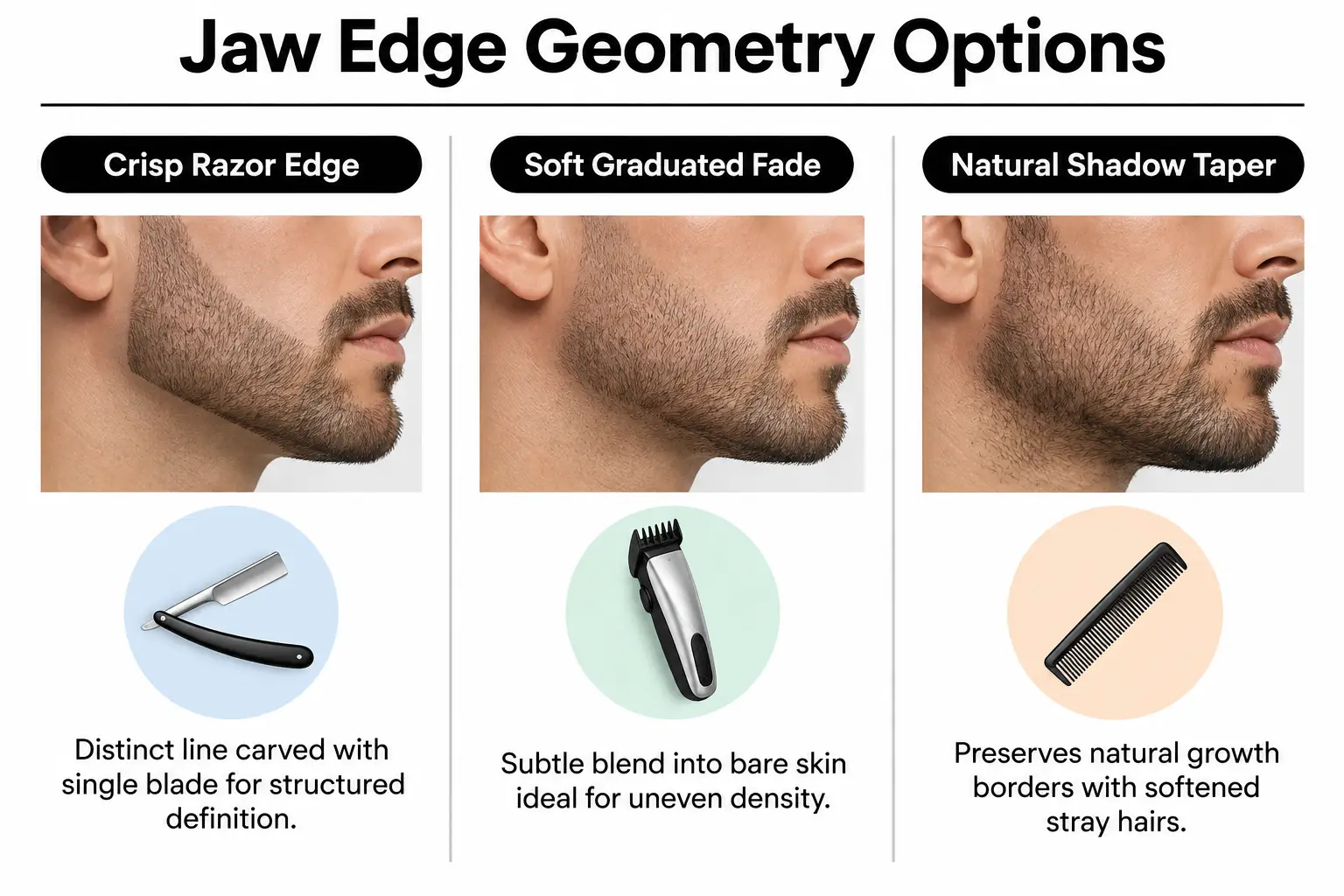
A crisp straight-razor edge works well for a structured beard. Softer edges help hide sparse growth without drawing attention to each gap. These starting points show what each approach needs:
| Option | Recommended Starting Point | What to Watch |
|---|---|---|
| Hard razor border | Dense chin hair that grows in a straight direction | Needs line touch-ups every four days |
| Gradual soft fade | Patchy cheeks or different thickness on each side | A soft edge should not look like neglected neck stubble |
| Natural shadow taper | Light stubble with easily irritated skin | Trimming too far up into the chin area |
For a clean finish with less friction, our hot spa shave helps the blade glide comfortably across sensitive neck skin. Check the shave price list before choosing how often to visit, so appointments fit your grooming routine and budget.
Matching Edge Sharpness to Natural Bone Structure
Bone structure should guide where we draw the lines. Cutting the beard border too high makes a round face look softer. On an oblong face, sideburns that narrow into thin chin strips can make the face look longer.
| Situation or Style | Recommended Choice | Avoid |
|---|---|---|
| Round jawline with a soft chin | Squared, lower neckline two fingers above the throat crease | Curving cheek lines inward toward the mouth |
| Square face with defined corners | Straight, parallel cheek line at the jaw's natural resting point | Cutting artificial 90-degree steps |
| Oblong face with a narrow chin | Wider, denser jaw stubble fading softly down the neck | Thin pencil lines along the jawbone |
| Uneven growth patterns | Balance the sides using sparse areas to set the width | Cutting one side higher to match thinner growth |
Pro rule: Follow your bone structure rather than your thickest patches of hair. Where the left side grows slower, trim the right side to match its thickness instead of raising the neckline.
For softer features, our guide to beard styles for round faces and soft jaws can help you choose a shape that suits your face.
Pairing Edge Geometry with Haircut Tapers and Skin Health
Stubble connects to your sideburns and the gradual fade at your temples, then meets the skin beneath your shirt collar. At our lounge, we shape facial hair to work with your haircut rather than treating the two separately.
| Starting Point | Pairing Direction | What to Sample or Test | Intended Effect |
|---|---|---|---|
| Low skin fade haircut | Tapered sideburns blending into 2mm stubble | Gradual clipper taper | Emphasizes cheekbone height and makes cheeks look slimmer |
| Classic scissor taper | Full sideburns meeting a defined jaw edge | Crisp straight-razor cleanup | Creates a businesslike look for events |
| Red, easily irritated neck skin | Steamed towel softening before shaping the line | Alcohol-free botanical balm | Prevents ingrown hairs and recurring razor bumps |
Comparing alcohol aftershave with post-shave towel wraps helps you avoid redness along freshly shaved neck edges. The American Academy of Dermatology recommends shaving with hair growth to reduce inflammation and protect the skin's outer barrier.
The Six-Step Jaw Calibration Protocol
We correct uneven lines in a set order, starting with skin preparation before any shaping begins. Each step helps us balance the sides without cutting away the growth needed for the outline:
Video: A step-by-step guide to shaping a beard for jaw definition (Teachingmensfashion)
- Warm towel preparation: Steamed towels relax the jaw muscles while softening coarse stubble before we begin shaving.
- Checking growth direction: Your barber checks the swirls of hair beneath the jaw to avoid shaving against their growth.
- Protective lather: Rich lather cushions sensitive skin and helps the straight blade move without dragging.
- Setting the border: We use the hyoid, a bone in the upper neck, as a guide for the lower neckline.
- Balancing thickness: Thicker patches are clipped a little shorter so they blend with areas of thinner growth.
- Cold towel compress: Chilled towels close follicles and calm the skin before we apply a soothing post-shave balm.
Practical check: Avoid tilting your neck all the way back to check your neckline in the mirror. Looking straight ahead with your chin level shows where the line actually sits.
Many clients ask about dead-skin removal during a hot towel shave compared with a facial. The blade physically lifts away dead cells around patchy areas, helping support healthier growth.
Balancing Upkeep Frequency and Investment
A sharp jawline takes regular upkeep, but your skin also needs time between shaves. Spend on appointments at the right intervals rather than adding more drugstore products. Part of that choice is knowing when a barber visit helps and when to leave the stubble alone.
| Budget Level | What to Prioritise | What to Question |
|---|---|---|
| Essential ($) | Bi-weekly edge cleanup and one good hydrating balm | Costly multi-blade replacement cartridges |
| Polished ($$) | Regular hot face shaves before important meetings | Complicated six-step home shaving kits |
| Complete care ($$$) | Full facial preparation and edge shaping matched to your haircut | Harsh chemical aftershaves and drying foams |
Our advice on spacing your shave appointments can help you plan around skin recovery while keeping the edges defined. Spending a little more on care before a wedding or executive photoshoot helps keep visible razor burn out of your photos.
Questions Westlake Village Clients Keep Asking
How do I fix a neckline cut too high at home?
Leave the neckline completely alone for seven to ten days so the hair beneath it can grow back. After that area fills in, have a stylist set the border two fingers above your Adam's apple.
Why does my stubble grow thicker on my chin than my jaw?
Genetics and blood flow mean most men have more hair follicles on the chin and mustache than along the jaw. A barber can trim the thicker patches slightly while leaving the slower-growing areas longer to balance the overall appearance.
Will a straight-razor shave cause ingrown hairs on my neck?
With proper steam preparation and lather, a straight blade cuts hair level with the skin instead of pulling it below the surface. That single edge greatly reduces the risk of ingrown hairs compared with multi-blade cartridges.
Can I shape patchy stubble if my skin is broken out?
Wait for active breakouts or inflamed cystic bumps to settle before shaving over them. Light clipper trims around the irritated spots let you tidy the area without spreading bacteria across the skin.
What is the best way to maintain my jawline between barber visits?
Clean up only the stray hairs well below your neckline and leave the main jaw border untouched. Without barber mirrors, attempts to sharpen that border at home almost always leave uneven edges.
Plan Your Jawline Reset in Westlake Village
North Ranch Styling Lounge shapes uneven stubble and corrects crooked borders here in Westlake Village, California. We pair precision men's cuts with hot face shaves that suit your bone structure, with care for razor-burned skin. Before your appointment, check the following so we can see your natural growth and work on settled skin:
- Growth check: Leave three to five days of stubble so we can see which direction your hair grows.
- Skin status: Check that your neck has no open cuts and is clear of sunburn or fresh razor burn.
- Target shape: Bring photos of the edge style you want if you have a particular shape in mind.
- Schedule timing: Book two days before a major event to give your skin time to settle.
- Home pause: Set your home razor aside and leave the neckline reset to our team.
Contact our lounge team to book your jawline reset.