


A men's style cut can look great in the salon because brushes, blow-drying and heavy pomade hold the hair in place. After your next shower, that shape disappears if the cut doesn't account for your growth patterns and head shape. The styling did the work that the cut should have done.
Quick clipper work can leave uneven bulk and cowlicks hidden beneath styling product. Once you wash it out, those areas push against the shape your stylist created. Knowing the difference between styling hair into place and cutting it to fall naturally can spare you a thirty-minute struggle each morning.
What's Inside This Guide
- Why Salon Freshness Fades Once You Wash It
- The Mechanics of Structural Weight Distribution
- Comparing Haircut Longevity Across Common Cutting Techniques
- Scissor Over Comb, Texturizing, and Clipper Options
- Matching Your Hair Texture to the Right Grooming Approach
- Maintaining Shape and Preventing Neckline Irritation at Home
- Common Questions About Haircut Retention
- Planning Your Next Cut in Westlake Village
Why Salon Freshness Fades Once You Wash It
Hair loses its shape at home when heat and wax hold it together, rather than the cut itself. Rushed cuts often remove bulk with blunt lines. They don't account for how much space the strands take up once they dry naturally.
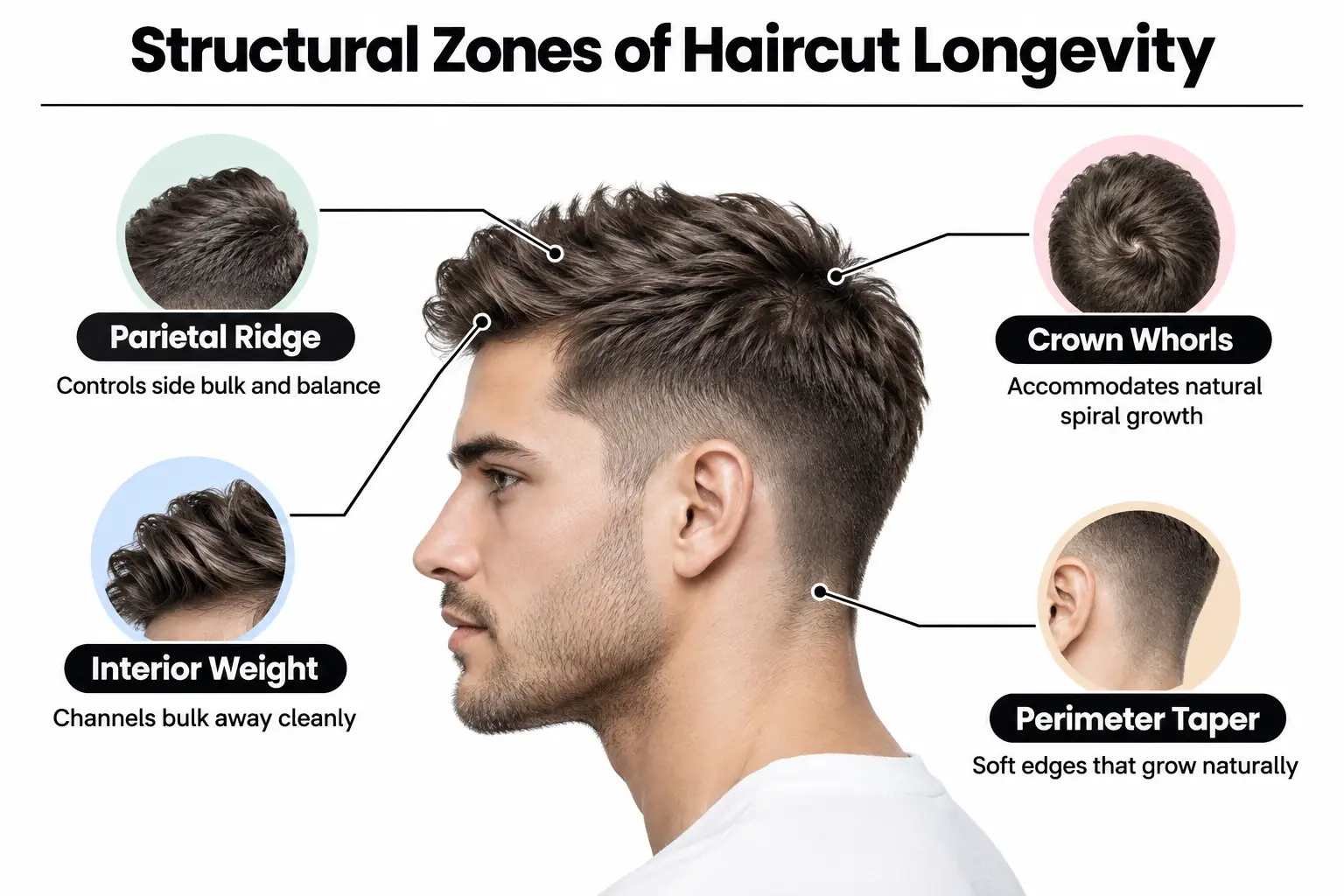
For a shape that lasts, each area needs to support the hair around it:
- Balancing the parietal ridge: This is the curve where your skull rounds toward the crown. Cutting here affects whether the sides lie flat or bulge outward.
- Working with growth direction: Small scissor adjustments give whorls and cowlicks room to follow their natural direction without sticking straight up.
- Softening weight: Layers inside the cut remove pockets of heavy hair without leaving the ends thin and fragile.
- Shaping the edges: Softly tapered hairlines grow out gradually, rather than leaving a harsh ledge of stubble within four days.
Other lengths need the same attention to how hair falls. Our guides to a women's cut and a kids' cut explain how that approach applies to the rest of your household.
The Mechanics of Structural Weight Distribution
Before washing or sectioning, we check the head shape and watch how the dry hair falls. At our lounge, every service starts with a look at growth direction, including natural parts and crown swirls. That gives us a shape to work with, rather than one to fight.
Video: Scissor-over-comb cutting for men's hair (Sam Villa Hair Tutorials)
We set the outer line with scissors, checking how hair rests against the ears and shoulders. Lifting sections lets us cut channels so thicker patches tuck under finer areas. The American Academy of Dermatology advises against harsh pulling to protect the hair's outer layer and follicles. Scissor angle matters here, too.
The Detail Most Fast Barbers Skip
The biggest mistake is pulling wet hair tight and cutting it with blunt clippers. Wet strands stretch. As they dry and shrink, uneven pulling can leave crooked edges and cowlicks that spring out of place.
Dry cutting shows how thick your hair really is at rest. It helps us choose a flattering cut based on how your hair behaves, not how it looks stretched under a wet comb.
Comparing Haircut Longevity Across Common Cutting Techniques
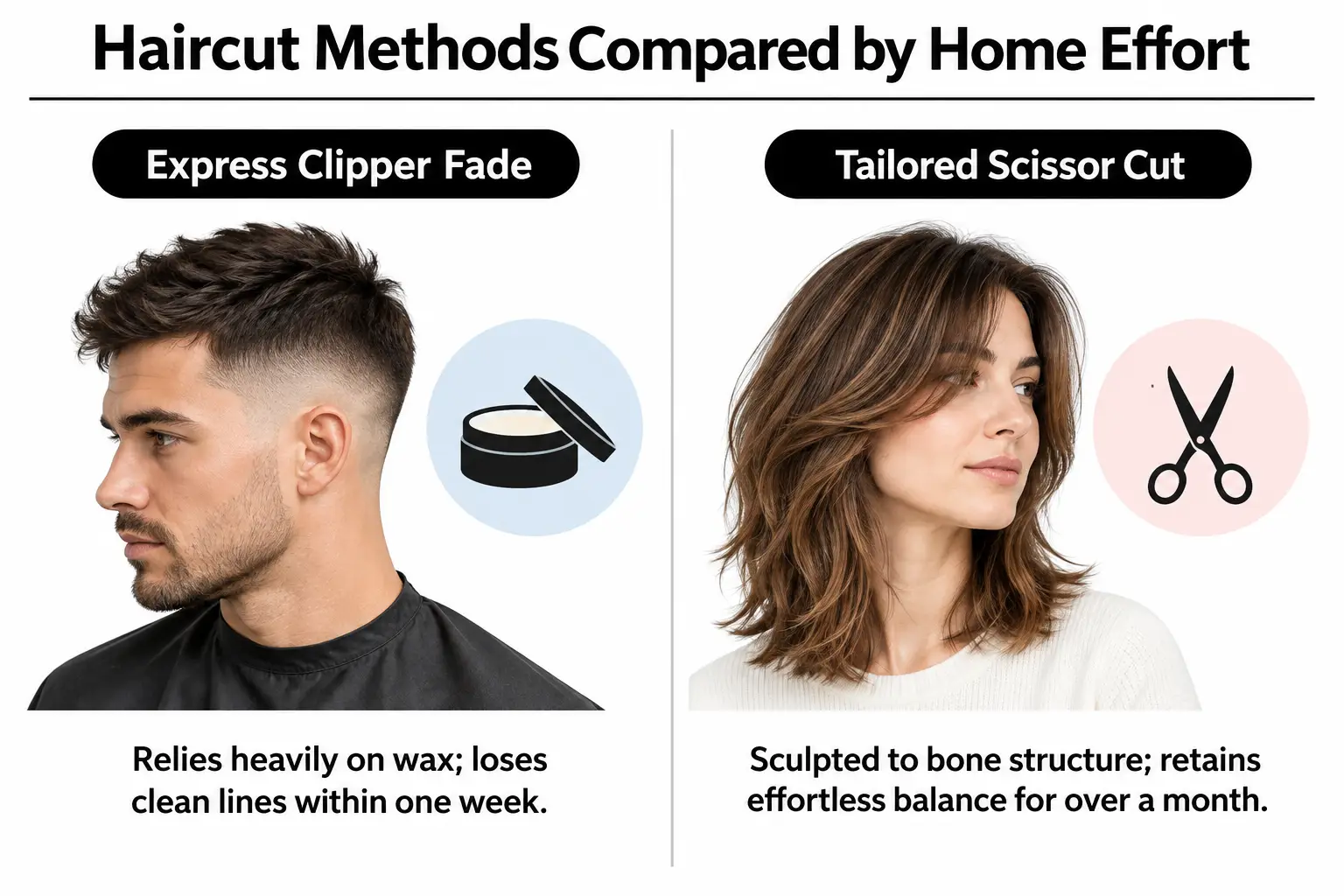
Many men expect the same basic result from any haircut. But the tools and cutting approach can mean three days of easy styling instead of three weeks. The comparison below shows how common methods differ from a cut that combines tailored scissor work with clippers.
| Cutting approach | Daily effort at home | How long the shape lasts | Scalp & skin stress | Price range | Best suited for |
|---|---|---|---|---|---|
| Quick clipper fade | High (needs blow-drying and heavy wax) | 5 to 7 days before looking bulky | Moderate friction and risk of clipper burn | $ | Very short buzz cuts on evenly shaped heads |
| Rough razor-textured cut | Medium (frizzes without leave-in cream) | 10 to 14 days before ends split | Little scalp friction, greater risk of split strands | $$ | Very thick, coarse hair that needs bulk removed quickly |
| Tailored men's cut | Low (falls into place after towel-drying) | 3 to 5 weeks of tidy growth | Minimal, with a smooth neck and hairline finish | $$$ | Executives and professionals, or anyone with difficult growth patterns |
Our pricing and service overview lets you compare the options before booking. It also explains why spending time on the cut can reduce the work you do at home each morning.
Scissor Over Comb, Texturizing, and Clipper Options
Each tool changes the shape and thickness of your hair in a different way. You don't need to know how to use them. Knowing what they do, though, makes it easier to explain the result you want at your appointment.
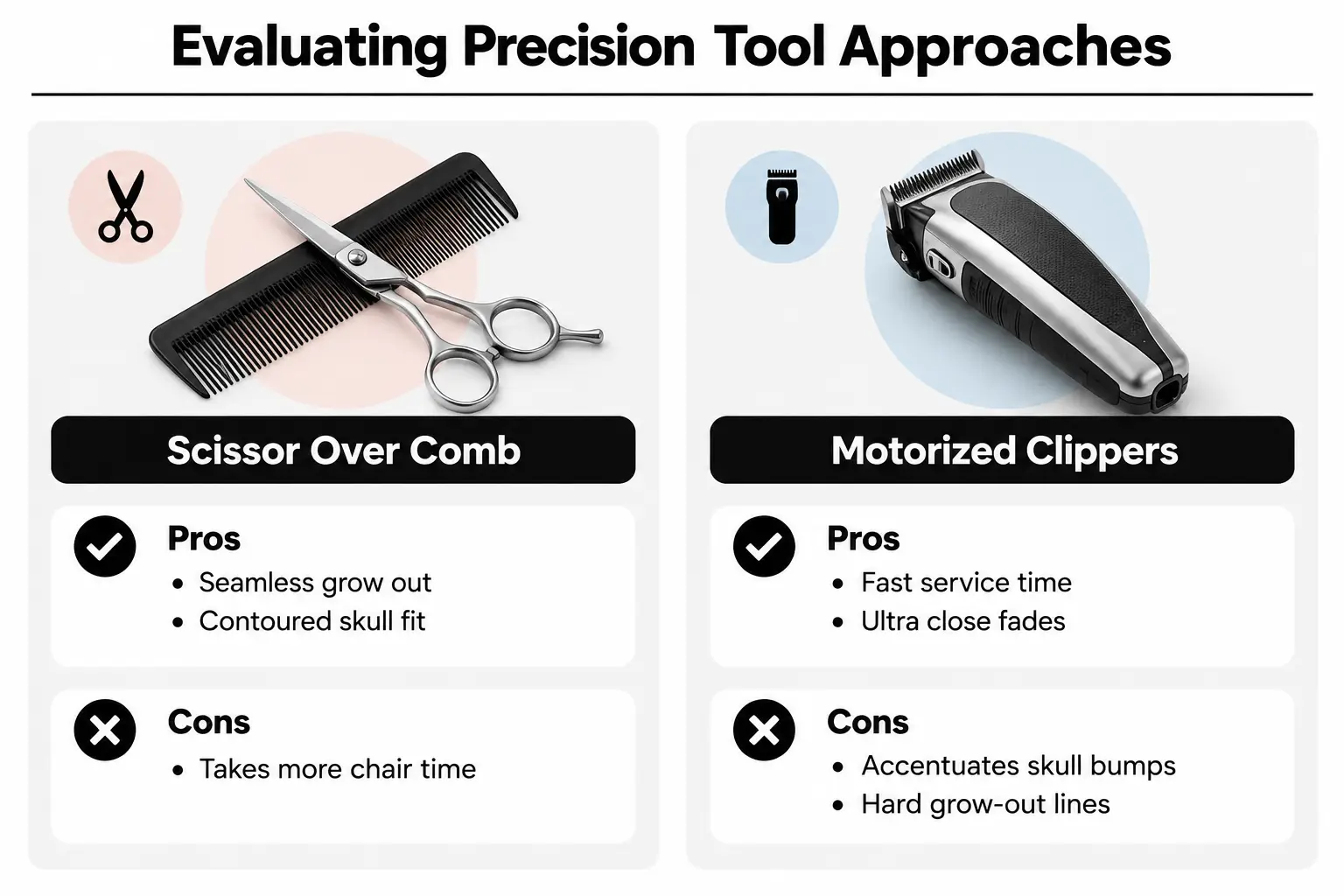
- Scissor-over-comb blending: The stylist holds scissors over a flat barber comb to follow the head's contours. Pro: Soft, tapered edges grow out without a blunt line. Con: This takes longer than cutting with a plastic clipper guard.
- Point cutting and texturizing: Snipping vertically into the ends removes bulk within the cut. Pro: Heavy strands can bend and move without visible chop marks. Con: Too much thinning leaves fine hair looking stringy, with the scalp showing through.
- Sectioned clipper fading: Motorized blades cut even lengths around the sides. Pro: Clippers quickly create a close fade down to the skin. Con: They don't account for dips in the skull, which can make an uneven head shape more noticeable.
A wash before your trim removes leftover product so the hair can lie naturally. You can book styling with a shampoo if you'd like that scalp cleanse as part of your appointment.
Matching Your Hair Texture to the Right Grooming Approach
Thick hair and fine hair need different treatment. Removing enough bulk to flatten coarse strands could leave finer hair looking patchy. Use the examples below to match what you see in the mirror with the cutting method and home care that fit.
| Hair concern | Suggested cutting method | Main risk to avoid | Home care habit |
|---|---|---|---|
| Fine hair with two crown whorls | Dry scissor detailing, keeping blunt inner layers for support | Thinning shears that leave cowlicks sticking up | Light sea salt spray instead of heavy paste |
| Coarse waves that puff out at the temples | Deep point-cut channels and scissor-over-comb work | Blunt clipper lines that leave a shelf above the ears | Leave-in conditioner on damp hair for moisture |
| Receding hairline or thinning temples | Low scissor taper with a shaped, textured top | Combing long strands forward in an unnatural sweep | Matte clay worked from the crown toward the front |
| Heavy beard meeting low sideburns | Scissor-and-clipper taper that gradually shortens at the neckline | Cutting the neckline too high beneath the jaw | Daily beard oil and tidy edge trimming |
A stylist's check: Thinning your whole crown within five minutes of sitting down removes the support your cut needs once the pomade washes out.
For more on moving away from rushed cuts, read about the haircut experience at our lounge. Consistent cutting work makes a difference to how much effort your hair needs between visits.
Maintaining Shape and Preventing Neckline Irritation at Home
Even a carefully shaped cut needs home care to keep your scalp clear and the edges tidy between appointments.
What to Check Every Week
- Day 1 to 3: Use lukewarm water to prevent dry scalp flakes. Check that your hair settles into place without heavy blow-drying.
- Day 7 to 10: Check the neckline. If you shave with multi-blade cartridges, switch to gentle single-edge strokes to prevent bumps and redness.
- Day 14: Look for bulk around your ears. A well-shaped cut should still sit flat against your head rather than bulge out.
- Day 21: Book your next trim before extra weight starts pushing your natural parts out of place.
Persistent redness or rough skin after shaving the lower neck deserves attention, too. A facial or other skin treatment can help keep the area calm and the tone even. You can also read about microchannelling while reviewing your skin-care options.
Common Questions About Haircut Retention
Why does my hair part flip in the wrong direction after I shower at home?
That flip happens because your hair was styled against its natural growth direction in the chair. Heavy paste can hold it there for a while. Once the hair gets wet, the cowlicks return to their usual position.
How often should I get a tailored cut to keep it effortless?
Most men do best with a trim every three to four weeks. Careful scissor work keeps its balance longer than a clipper fade, which often loses its sharp edges within seven to ten days.
Can the right haircut help slim a rounder face shape?
Yes. Keeping the temples and the curve toward the crown flat, with height on top, makes the face look longer. A tailored men's cut draws the eye upward instead of adding width beside the cheeks.
Why do I get red bumps along my neckline between haircuts?
Dry shaving with a cartridge can pull curly neck hairs below the skin, where they become ingrown and cause irritation. The National Library of Medicine guidance on folliculitis barbae explains more about sensitive skin and inflamed hair follicles.
What should I bring to my appointment to make sure my cut lasts?
Bring photos from ordinary mornings when you haven't had much time to style. Seeing how your hair dries naturally helps us decide where to remove bulk. The aim is to let it settle into place without constant blow-drying.
Planning Your Next Cut in Westlake Village
At North Ranch Styling Lounge in Westlake Village, California, we want your cut to work after you wash it at home. That means respecting your head shape and the time you have each morning. Use this checklist when booking to make sure those details are part of the appointment:
- Face shape check: Your stylist checks how evenly your head is shaped before picking up clippers.
- Dry texture review: We look at natural parts and whorls before wetting the hair.
- Careful scissor work: Bulk inside the cut is removed cleanly, rather than shredded with thinning tools.
- Clear styling advice: You leave knowing which simple towel-drying routine works for your cut.
Contact our team to book a consultation for your next cut.