


Choose a fade for very short sides and frequent touch-ups, or a tailored men's style cut for shape that lasts longer. The difference shows after you wash your hair at home.
For sides that taper right down to the scalp, a traditional barbershop buzz or fade does the job. Plan on touch-ups every ten days if you want to keep that tight finish.
Cowlicks need a different approach. A scissor-led appointment is the safest starting choice if you want a softer shape that suits your face and looks right in executive meetings.
Your head shape and hair density matter, as does the time you spend styling. Fixed clipper guards remove bulk at set lengths. A tailored cut accounts for the parietal ridge, where the head curves toward the top, plus double crowns and growth angles. That helps hair settle without handfuls of pomade each morning.
What's Inside This Guide
- Why Clipper-Only Cuts Fail When Hair Grows Out
- The Structural Difference: Tool Choice and Cutting Angles
- Selecting the Right Cut for Your Skull Contours and Bone Structure
- Pairing Your Hairline with Natural Beard and Neck Transitions
- How Stylists Tame Double Crowns and Stubborn Cowlicks
- Weighing Upkeep Cadence and Real Value
- Straight Answers on Westlake Grooming Decisions
- Plan Your Next Haircut at North Ranch Styling Lounge
Why Clipper-Only Cuts Fail When Hair Grows Out
One-size-fits-all cuts treat every head as perfectly round. Busy walk-in shops often run clippers straight up the sides, cutting across the bumps and flat areas of your head. Within four days, that tight finish starts pushing outward into a ledge around the temples. It can make a face look rounder or draw attention to an uneven jawline.
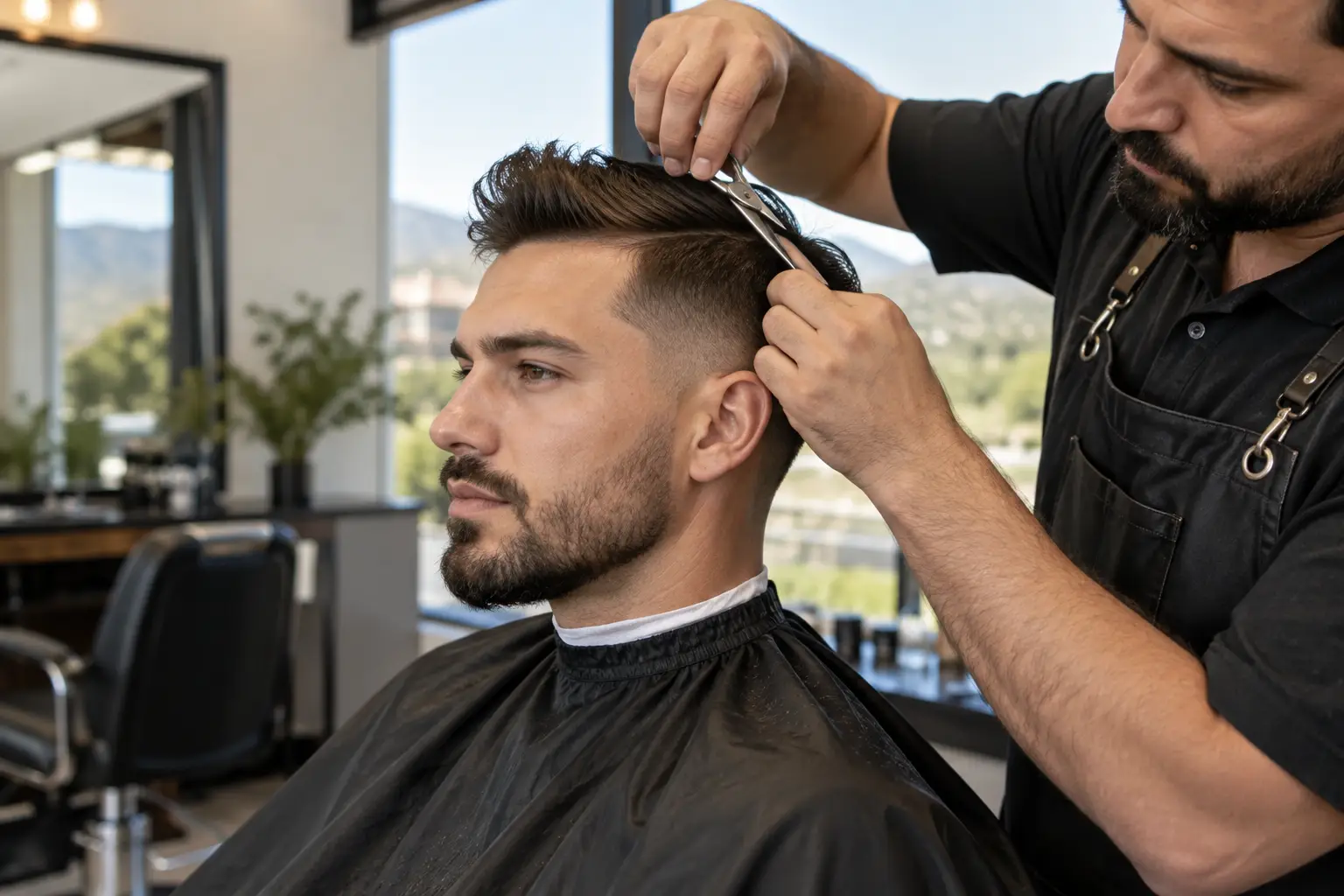
Blunt clipper cuts leave thick, square ends. As the hair gets longer, those ends push against each other and make crown cowlicks stick up. Many men recognize this problem: their haircut only looks good on the first day, then becomes hard to manage at home.
Point cutting, which means cutting into the ends with scissor tips, and balancing weight inside the cut prevent that early loss of shape.
Practical check: Feel through your hair three days after a cut. Harsh ridges, or a top that falls flat without wax, point to missing scissor work inside the cut.
Good scissor work follows the direction your hair grows, so it falls into place after a shower and towel dry. Understanding how a style cut differs from a quick fade helps you move beyond a college-style buzz. That matters if you want your haircut to suit a boardroom.
The Structural Difference: Tool Choice and Cutting Angles
Tool choice affects how a cut fits your daily routine. Experienced stylists work through bulk differently from barbers doing quick skin tapers. Clippers cut very close around the ears and nape, while shears give finer control over changes in length across the curves of your head.
Clipper Fade vs Shear-Crafted Styling
Booking our men's style cut starts with a consultation. Your head shape guides where we leave weight and where we remove it. Standard barber fades focus instead on a sharp contrast close to the skin. Compare those approaches below before deciding which appointment fits the result you want.
| Option | Recommended Starting Point | What to Watch |
|---|---|---|
| Skin fade or taper buzz | Close skin blends, very dense coarse hair, visits every two weeks | Exposes scalp blemishes and loses shape within 7 to 10 days; can create a flat-top effect |
| Textured men's scissor cut | Fine or wavy hair, office wear, less daily styling at home | Needs experienced scissor work and avoids sharp contrasts against bare scalp |
| Combined scissor-over-comb cut | Men growing out skin fades into medium-length professional styles | Needs careful blending around the upper curve of the head to avoid heavy steps |
Cutting standards from bodies like the state barbering and cosmetology board explain how sectioning and elevation, the angle hair is held, affect its fall. At our lounge, we check density and growth spirals before wetting your hair. Those checks help us cut clean lines that hold for weeks.
Selecting the Right Cut for Your Skull Contours and Bone Structure
Every head has its own contours. Some clients have a prominent occipital bone, the bone at the back of the skull. Others have flat temples or a long face. Busy barber shops use the same guard sequence across different face shapes, from oval to square or heart-shaped.
Our guide to choosing a flattering haircut explains how gradual changes in length soften a strong jawline. Adding height can also balance rounded cheeks. Scissors let us adjust those proportions so the finished shape looks more even, rather than simply following every contour underneath.
| Situation or Style | Recommended Choice | Avoid |
|---|---|---|
| Round face | Textured scissor cut with volume on top and narrow tapered sides | Wide, blunt cuts at the temples that make cheeks look broader |
| Oblong or long face | Classic side-parted taper with some fullness at the temples and ears | High-and-tight fades with a tall pompadour that makes the head look longer |
| Square jawline | Soft texture around the edges with low tapers at the sides | Hard, box-shaped outlines that look too square and artificial |
| Receding temples in mature hair | Forward texture with soft scissor blending across the corners | High bald fades that leave thinning sections of the hairline exposed |
Stylist's rule: Avoid a haircut shape that repeats your jaw's width. Round faces need height, while angular faces need softer edges.
Parents booking family appointments should keep growth patterns in mind for younger boys, too. A tailored kids' cut keeps their natural texture and controls cowlicks much better than a close buzz. The same care with length matters even on a smaller head.
Pairing Your Hairline with Natural Beard and Neck Transitions
Sideburns connect your haircut to your facial hair, and the neckline sits just above your shirt collar. These edges affect the whole result. Rushing the blend on a high-contrast fade can leave a hard break between your hair and beard.
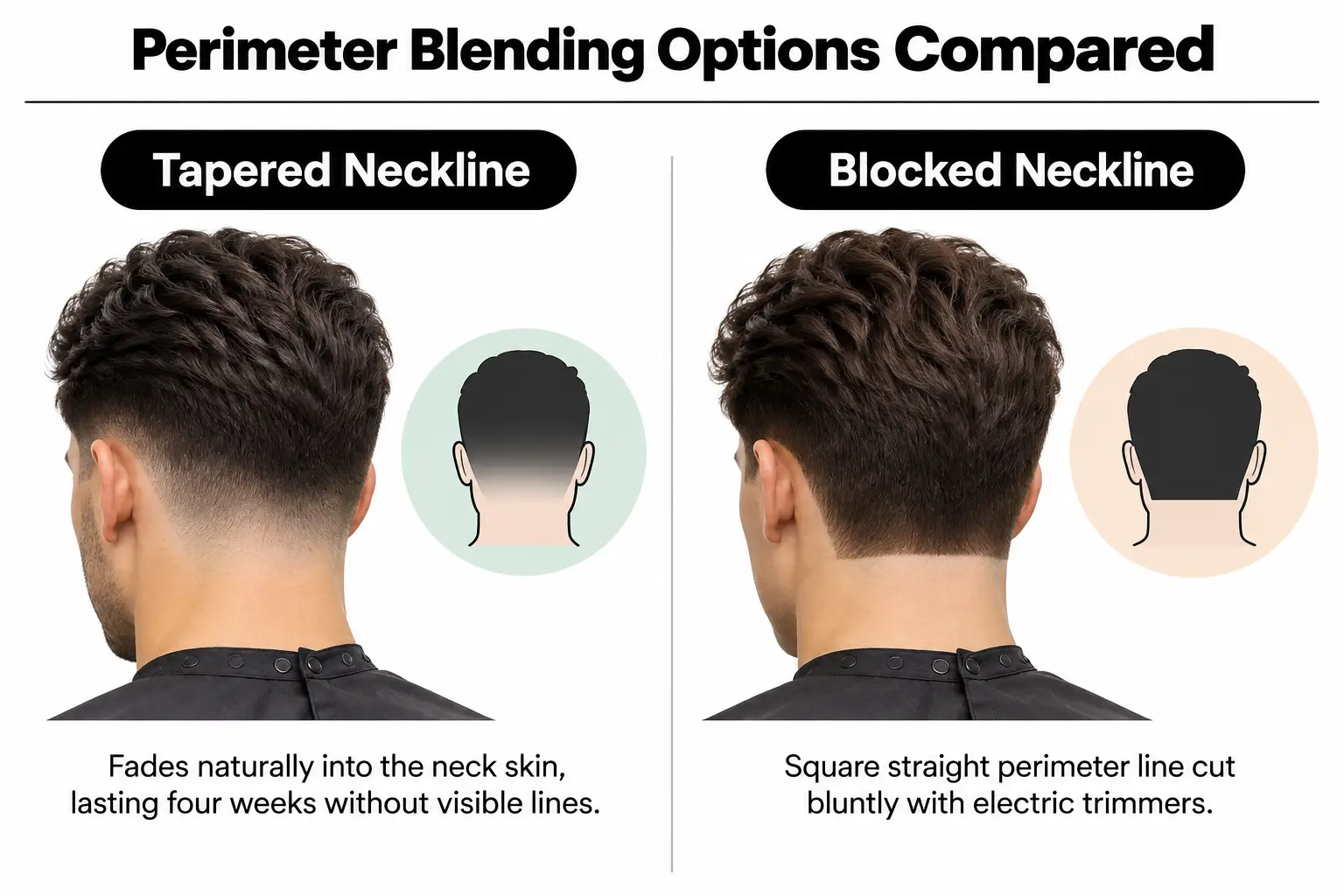
Harsh lines can look young in Westlake Village executive settings. Tapering the edges with scissors lets the sideburns blend gradually into beard growth rather than stopping at a hard line. The right connection depends on how much facial hair you wear and where it grows thickest.
| Starting Point | Pairing Direction | What to Sample or Test | Intended Effect |
|---|---|---|---|
| Heavy full beard | Low scissor taper with finger-blended edges along the cheeks | Comb the dry beard downward to find thin patches | A connected blend that slims the jawline without abrupt steps |
| Shaped stubble | Natural textured side taper matched to 3-day stubble | A natural blend at the skin rather than straight-razor lines | A relaxed but polished look for business casual settings |
| Clean-shaven jaw | Gradual scissor-over-comb neckline rounded behind the ear | A natural neck taper rather than a hard square edge | A clean collar line that stays neat for three full weeks |
Important events call for extra care with timing. Before booking groomsmen appointments, read our advice on when to cut your hair before a wedding. It helps you plan the appointment around professional photographs, rather than leaving the haircut until the last moment.
How Stylists Tame Double Crowns and Stubborn Cowlicks
Buzzing straight across the spirals at the crown is a common problem with standard clipper cuts. Double crowns spring upward when the hair gets too short. Careful scissor work follows those growth patterns instead of cutting away the length that keeps them down.
Video: A step-by-step men's scissor cut for a business style (The One Minute Barber)
- Check dry hair: Look at the head before washing to find the crown spirals and see where the hair naturally parts.
- Map clockwise growth: Divide the hair into pie-shaped sections that follow the angle at which it grows from the scalp.
- Keep crown weight: Leave an extra quarter-inch directly over the center of the spiral to help hold stubborn strands down.
- Point-cut the ends: Cut tiny channels with the scissors parallel to the strands instead of making blunt cuts across them.
- Blend the edges: Taper the neckline without cutting artificial high borders that start looking crooked within three days.
Crown check: Before clipping a double crown closer than a finger's depth, check by hand how removing that weight will affect the hair.
We train extensively in mapping hair growth at our salon. Working with those spirals takes care at the appointment, but it removes the daily struggle with heavy pastes and hairspray at home. The cut does the work that products would otherwise have to do.
Weighing Upkeep Cadence and Real Value
Price per appointment leaves out how often you need to return. Keeping a zero-fade sharp means a visit every ten to fourteen days, even if each buzz costs less. A tailored scissor cut holds its shape for four to six weeks. Over time, that makes the cost of maintaining it considerably lower.
| Budget Level | What to Prioritise | What to Question |
|---|---|---|
| Tier $ (Basic barber fade) | Clean clipper work around the lower ears and a quick appointment | Services finished in under fifteen minutes without checking the hair dry |
| Tier $$ (Standard men's cut) | Guard blending with a scissor trim on top and a neck shave | Blunt razor thinning that damages fragile ends |
| Tier $$$ (Tailored executive cut) | Head-shape assessment and wash, with cowlick control and home styling advice | One-size-fits-all routines that skip a personal styling consultation |
Paying for a custom cut also means less time spent fixing your hair in the mirror. Our guide to top-rated local haircut options covers more choices in Westlake Village. For family appointments, you can also look at services such as our women's cut.
Straight Answers on Westlake Grooming Decisions
Can a men's style cut incorporate faded sides?
Yes, we can use short clipper tapers around the lower edges and keep scissor-cut shape through the temples and crown. Combining the two gives you a fade's clean lines with the longer-lasting shape of scissor work. It also prevents the sides from puffing into the mushroom shape common with standard clipper cuts.
How often should I book a tailored scissor cut?
Most men get four to six weeks of shape from a scissor cut between visits. Feathered ends follow the hair's growth direction, so it grows out gradually instead of bunching into heavy spots. Clients who keep a very short neckline may want a quick edge cleanup at three weeks.
What should I do if I have two crowns that stick up?
Leave a little more length around both crown spirals so your stylist has enough hair to balance the weight. Short clipper work removes the weight that holds those strands down, making them stand up. With our custom cut, we point-cut the ends to soften the hair around those stubborn spirals.
Will a style cut take significantly longer than a barbershop visit?
Allow 35 to 50 minutes for a dedicated styling appointment, compared with a quick 15-minute barber buzz. The extra time covers a detailed consultation and a wash suited to your hair. We also use it for scissor work shaped to your head and practical advice for styling at home.
Plan Your Next Haircut at North Ranch Styling Lounge
Cuts that look rough after three days are a reason to try an executive styling appointment. Here at North Ranch Styling Lounge in Westlake Village, California, we shape each cut around your jawline and crown growth. Your schedule matters too, including how often you can return.
Before your next appointment, check these points so you can tell your stylist what you need:
- Face shape check: Will the cut add height where you need it or soften sharp angles?
- Upkeep timeframe: Can you make time for fade touch-ups every two weeks?
- Growth patterns: Have you shown your stylist the cowlicks that give you trouble?
- Home routine: Will the hair settle into place without heavy styling products?
- Executive goals: Does the cut suit your position at work?
Contact our team to book a consultation for a cut shaped to your bone structure.