


A clean neckline fade for a short boxed beard connects your haircut to your facial hair without a sudden change in thickness. Sideburns that drop straight into heavy stubble can hide your jawline and make the beard look bulky. We choose the transition around your jaw angle, the position of your ears and where your beard grows thickest.
At our lounge, we work with your bone structure and cowlicks so the lines look sharp, not drawn on. Your choice of a skin taper, shadow blend or firm boxed edge sets the shape. That matters during a professional beard trim and when you maintain the edges at home.
What's Inside This Guide
- Three Ways to Connect Sideburn Fades to Facial Hair
- Matching the Transition to Bone Structure and Hair Texture
- Trade-Offs Between Sharp Lines, Soft Tapers, and Boxed Borders
- Upkeep Intervals and Professional Maintenance Tiers
- Skin Sensitivities, Razor Burn, and Trimming Precautions
- How to Map Your Neckline and Jaw During a Consultation
- Common Questions on Beard Line Transitions
- Plan Your Executive Grooming Session
Three Ways to Connect Sideburn Fades to Facial Hair
Connecting a fade to a beard means controlling thickness across the cheekbone and tragus, the small flap at your ear opening. Abrupt changes look artificial, but too much blending can make a thick beard look thin. Our grooming services pair careful haircutting with beard shaping so those areas work together.
Video: How To Fade And Shape a PERFECT Beard | Easy Barber Tutorial (David Escamilla)
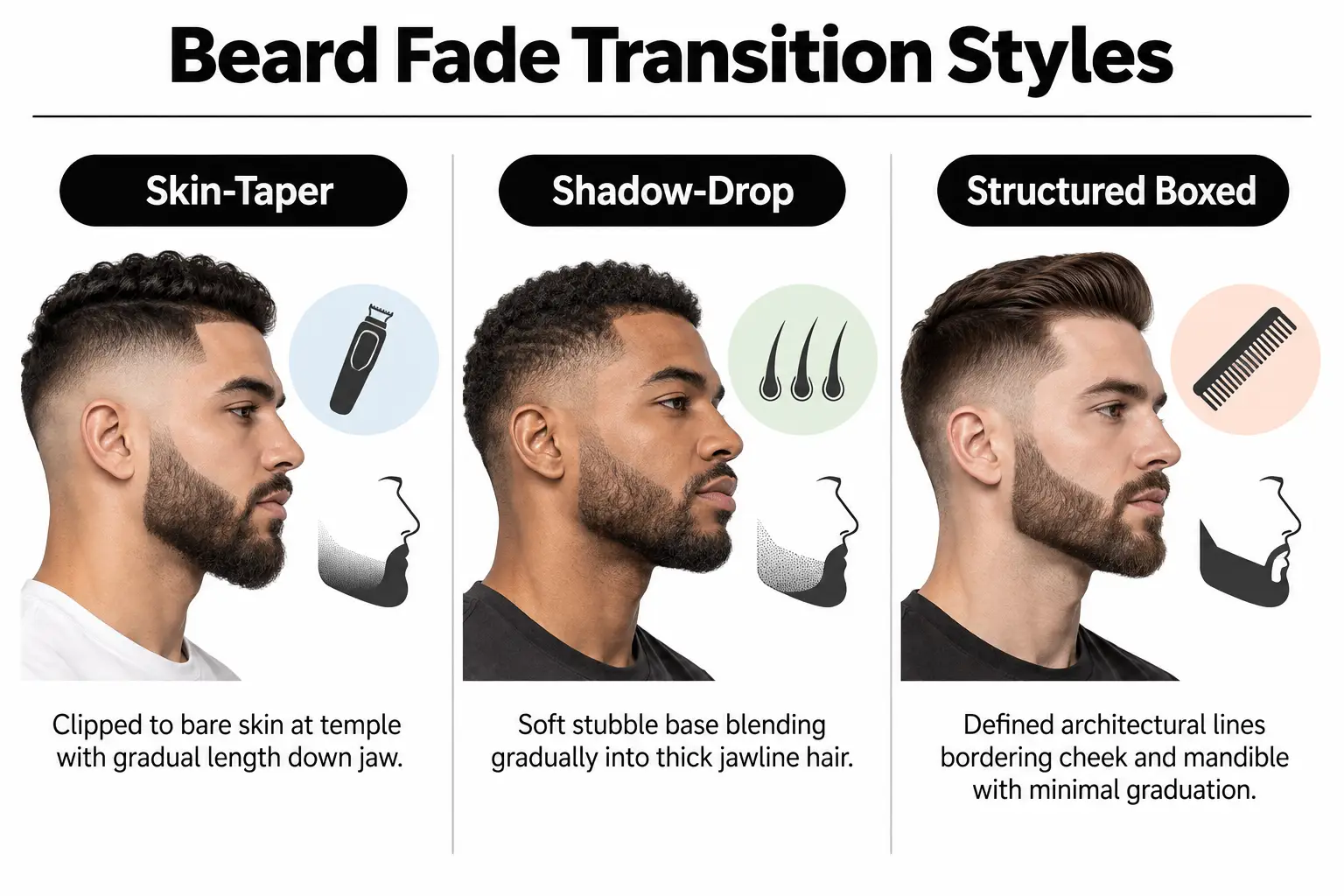
| Option | How It Works | Results Last | Upkeep | Downtime |
|---|---|---|---|---|
| Skin-taper transition | Clips to bare skin at the sideburn hollow, then uses longer guards toward the lower jaw. | 4 to 6 days | Weekly edge touch-ups | None |
| Shadow-drop blend | Leaves light stubble across the temple and blends into the beard's full thickness along the cheek. | 7 to 10 days | Bi-weekly reshaping | None |
| Structured boxed edge | Sets a straight, crisp border across the jaw and cheekbone with little blending at the ear. | 3 to 5 days | Weekly edge razor work | 1 hour for redness to ease |
Clipping down to skin brings out a square jaw, while a softer shadow blend helps hide patchy growth near the ears. For a closer look at how temple tapers affect your side profile, read our guide to style cuts and quick fades.
Matching the Transition to Bone Structure and Hair Texture
Jaw shape helps us decide where to leave beard weight in relation to your earlobes. Coarse hair springs outward and can widen the face when cut bluntly. Fine hair needs more thickness along the lower edges so it doesn't look see-through in bright light.
| Type or Concern | Better Option | Why |
|---|---|---|
| Soft or receding chin | Shadow drop with more chin weight | Draws the eye downward, making the face look longer and the jaw more defined. |
| Coarse, unruly growth | Low skin taper with scissor-cut sides | Removes bulk at the widest part of the face so the cheeks look leaner. |
| Uneven cheek density | Clean neckline fade with a lower border | Removes sparse upper patches so the main beard looks fuller and deliberately shaped. |
| Square, heavy jaw | Structured boxed edge with a blended neck | Follows the angles of the jaw without making the cheeks look rounder. |
Men trying to give a softer jaw more definition often trim the neckline too high. Leaving more weight near the chin can make the bone structure look stronger. Our guide to beard shapes for round faces and soft jaws explains how that balance changes the outline of your face.
Trade-Offs Between Sharp Lines, Soft Tapers, and Boxed Borders
Before choosing a sharp edge, think about how often you're willing to trim it. Some shapes need regular work at home. Others leave more room between visits to our Westlake Village salon.
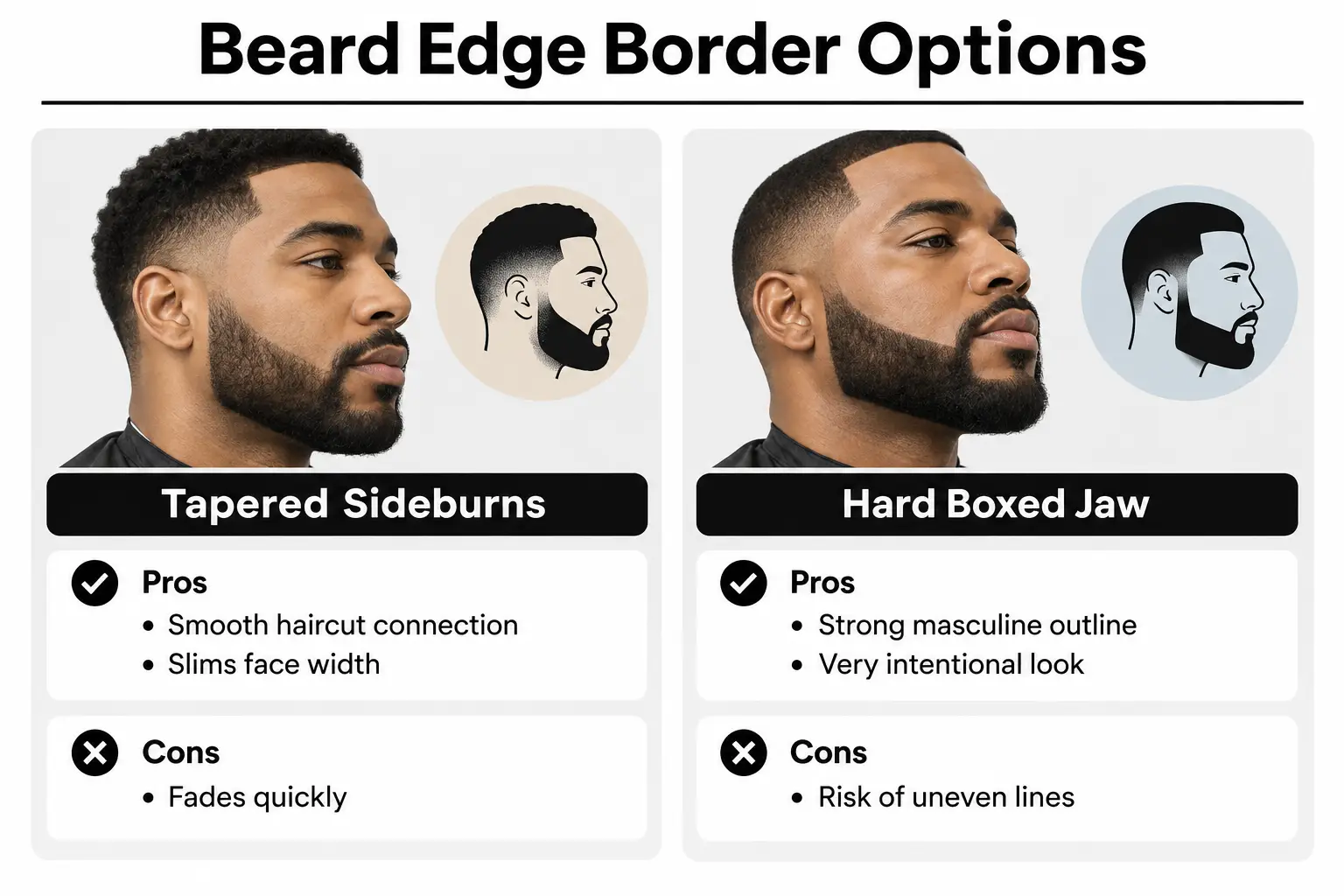
- Skin-taper transition: Brings out cheekbones and gives a dark beard the strongest contrast, but needs frequent touch-ups as stubble returns within two days.
- Shadow-drop blend: Forgives differences between the two sides of your face and uneven growth, though it lacks the sharply cut finish of a high-contrast office style.
- Structured boxed edge: Gives a beard strong definition for the workplace, but even slightly misplaced lines can draw attention to an uneven jaw.
Looking down into a bathroom mirror is the main cause of uneven edges during home trims. Reading about common beard trimming mistakes before picking up the clippers can save you weeks of waiting for hair to grow back.
Upkeep Intervals and Professional Maintenance Tiers
Keeping a short boxed beard's neckline clean takes regular attention, even when the haircut still looks tidy. Hair on your head grows roughly half an inch per month. Beard growth often varies from one area to another, so the edges may lose their shape at different rates.
Basic edge work ($): At home, stick to removing stray cheek hairs and clearing stubble from the lower throat. Do this every four days with good-quality magnetic clippers, rather than trying to reshape the whole beard.
Standard lineup & cut ($$): This studio service combines an electric lineup with clipper work. It keeps the change in length smooth through the temples and maintains parallel borders.
Full shaping & conditioning ($$$): This salon appointment includes freehand scissor shaping and straight-razor detailing, followed by conditioning oils. A dedicated beard trim and treatment helps soften brittle beard hair as part of that care.
Regular professional shaping keeps beard bulk from spreading sideways as it grows. That attention to upkeep also appears in the broader grooming habits covered in our review of local executive haircut trends for 2025.
Skin Sensitivities, Razor Burn, and Trimming Precautions
Sharp border work creates friction on sensitive cheeks and throats. Shaving against growth or pressing with dull blades can cause irritation and folliculitis, inflammation around hair follicles. Guidance from the American Academy of Dermatology recommends shaving with hair growth to reduce bumps and razor burn.
Active cystic acne, open blemishes or sunburn along the jaw mean razor lineups should wait until the skin heals. People prone to ingrown hairs should compare multi-blade and single-blade razors for sensitive skin before attempting a close neckline shave at home.
Stylist's rule: Don't place the neckline on the crease where your jaw meets your neck. Set it two finger-widths above your Adam's apple and blend upward to avoid a double-chin effect when you look down.
For lingering redness after shaping, apply a cold towel, then squalane or argan-based beard oil labeled non-comedogenic, meaning it won't clog pores. Replace alcohol-heavy aftershave with calming witch hazel to help protect the skin's natural oil barrier.
How to Map Your Neckline and Jaw During a Consultation
Talk through the beard border with your stylist before any trimming starts. We need to see your relaxed jaw and understand where the hair changes direction. These steps help both sides line up without forcing your beard into a shape that doesn't fit:
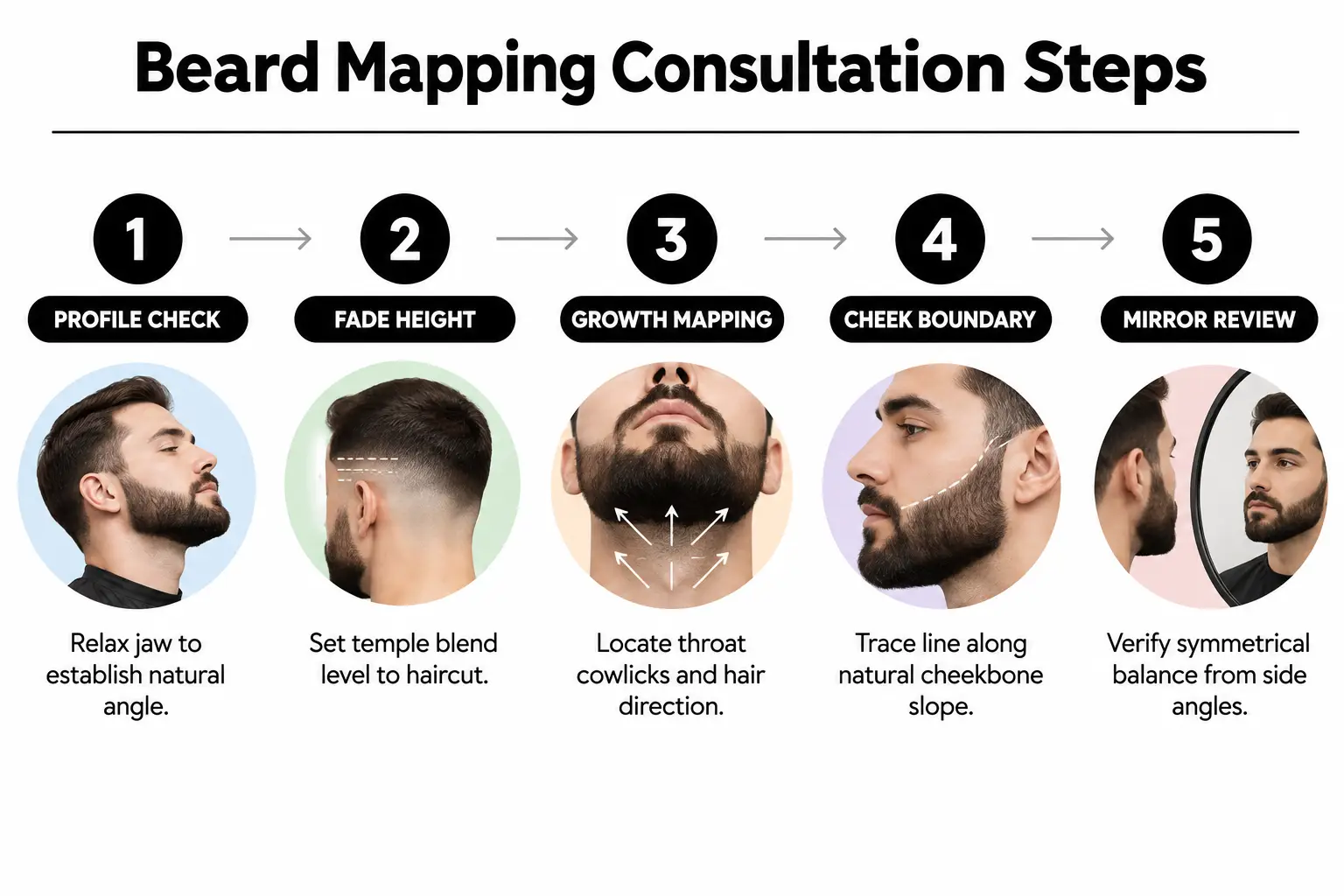
- Relax your jaw: Leave your jaw unclenched while we check your side profile. This lets us see its natural angle without tension changing the shape.
- Set the temple fade level: Choose bare skin or a half-guard shadow, which leaves a little stubble, to suit the haircut you have now.
- Point out growth swirls: Show us cowlicks along your throat where the hair grows sideways. Those patches determine which direction we move the clippers.
- Agree on the cheek line: Choose a natural slope along the cheekbone or a straight line from the sideburn to the mustache.
- Check under neutral lighting: Use a handheld mirror before leaving the chair. Compare both sides at 45-degree angles to check that the shape looks balanced.
Checking the planned lines before blade work helps keep your facial proportions balanced. For questions about the appointment before you book, contact our front desk.
Common Questions on Beard Line Transitions
Where should a short boxed beard neckline actually stop?
Place the neckline just above the Adam's apple, curving upward toward the jaw corners below each ear. Cutting that border too high removes hair from the jaw's outline. It can leave an awkward shape that becomes more obvious when you talk or smile.
How do I stop my sideburns from puffing out as the fade grows?
Sideburns puff out when the hairs grow away from your head instead of lying flat. Apply a light beard balm, then brush downward with a boar-bristle brush. This helps keep the blend flat between shaping appointments.
Can a beard trim improve the look of an asymmetrical jaw?
Yes, leaving slightly more hair on the narrower side can balance small differences in jaw shape. Careful trimming adjusts the beard's outer edge rather than copying the same length on both sides. From the front, that can make the face look more even.
Is a straight razor necessary for fading the neckline?
Straight razors give borders a crisp finish, but close-cutting, zero-gap foil trimmers are often a better choice for people with recurring ingrown hairs. Either tool can leave a sharp edge with the right technique.
Plan Your Executive Grooming Session
Bring your beard and haircut plans to North Ranch Styling Lounge in Westlake Village, California. We'll shape the taper and beard line around your face rather than force a standard outline. To arrange your grooming session, book an appointment with our stylists.