


A tailored scissor cut helps hide early temple recession by keeping weight at the parietal ridge, the curve above your temples. Point-cutting, which uses the scissor tips, softens the ends without exposing more scalp. Subtle color can reduce contrast at the hairline, while knowing your custom salon hair color cost helps you plan for upkeep.
Standard clipper buzzes remove the bulk that helps cover receding temples. That can leave sharp lines pointing straight to the thinner spots. At our lounge, we shape the hair strand by strand around your head's contours, keeping enough texture and volume for easy styling at home.
What's Inside This Guide
- Anatomy of Structural Shear Work and Color Placement
- The Step-by-Step Architecture of Temple Concealment
- Scissor Shaping Compared to Common Hairline Cover-Ups
- Textured Crop, Soft Quiff, and Low-Contrast Toning Pathways
- Matching Hairline Patterns to the Right Blending Protocol
- Ongoing Upkeep and Home Styling Discipline
- Common Questions on Disguising Receding Hairlines
- Planning Your Hairline Consultation in Westlake Village
Anatomy of Structural Shear Work and Color Placement
Careful scissor work leaves weight where you need it instead of taking the same amount off everywhere. Clipper guards can make thin temples look patchy by exposing more scalp beside thicker hair. Our Japanese steel shears let us leave overlapping sections that visually fill those receding corners.
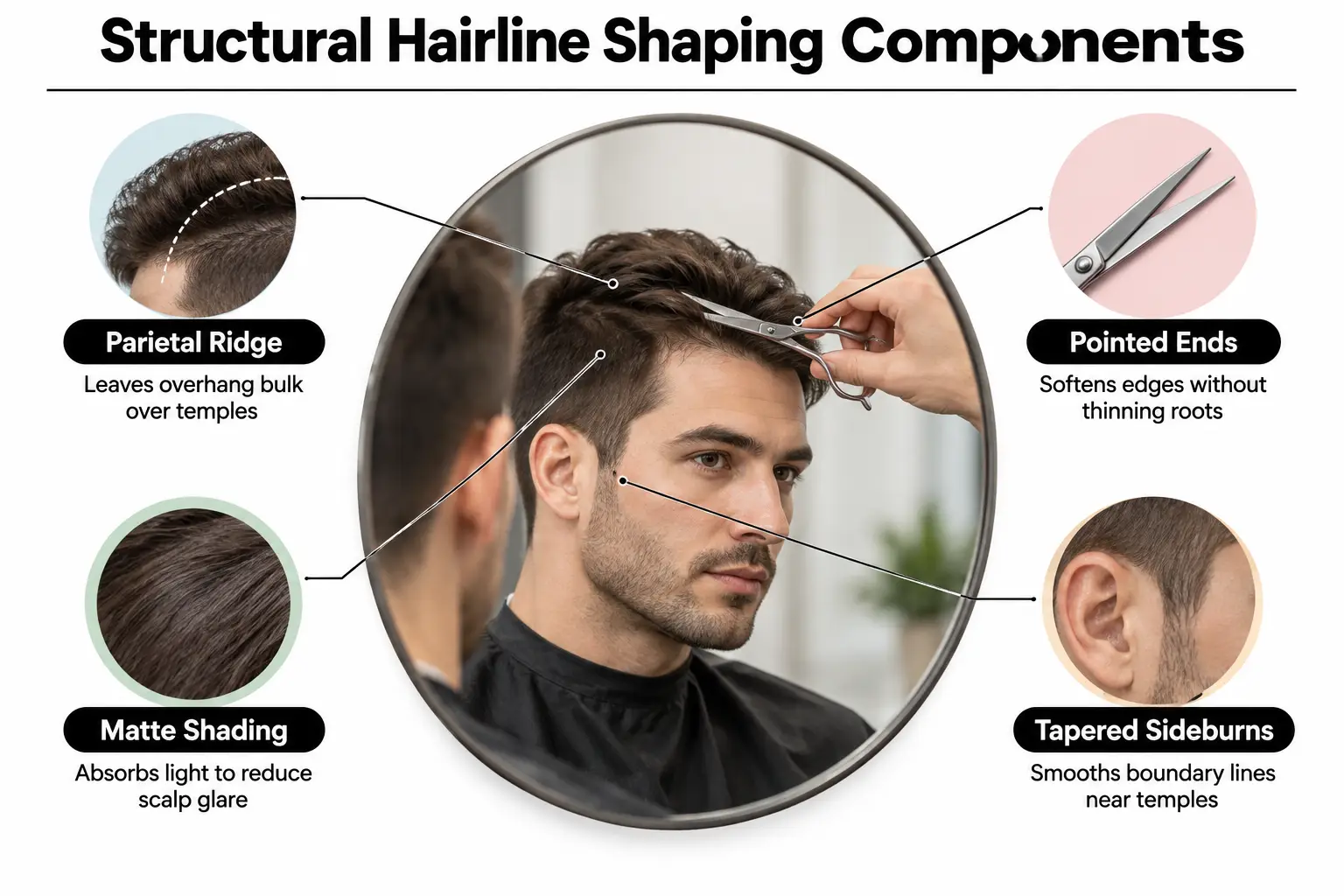
- Length above the temples: Keeping enough hair along the curve of your head creates a natural overhang that shades the receding corners.
- Point-cutting inside the shape: Cutting into the ends at an angle removes bulk without shortening the outer edge, so neighboring pieces can sit together.
- Soft, low-contrast shading: A demi-permanent color, which gradually fades, half a shade deeper than your base absorbs light and reduces visible scalp glare.
- Soft sideburn transitions: Blending the sideburns gradually into the temples avoids a strong horizontal line that draws attention to receding peaks.
Our guide to choosing a flattering men's haircut explains why hair density needs to work with your face shape. Neither should be considered alone. For help deciding how color and shape could work together, contact our styling team.
The Step-by-Step Architecture of Temple Concealment
Before wetting your hair, we check how it grows and falls while dry. Whorls and cowlicks show us which direction the hair wants to take. This also lets us see where it gathers naturally and where coverage starts to thin.
Video: Roberto Torres explains haircut considerations for a receding hairline.
Next, we set the outline around your lower neckline and ears. Moving upward, we keep density at the crown and the middle of the scalp toward the front. Sections are directed forward and diagonally across the corners, rather than straight back. Cutting at forty-five degrees leaves soft layers that fall over one another.
The Micro-Texture Detail Most Barbers Rush Past
Rushed thinning at the roots is a common mistake. Thinning shears cut scattered hairs short, leaving stubble that can push longer strands up and expose scalp. For texture inside the cut, we use straight scissor tips through the mid-lengths. Those small spaces let neighboring sections lie flat and fit together.
People looking for a haircut in Westlake Village often find that careful hand-cutting makes mornings much easier. With the weight balanced properly, hair falls into place with a little matte clay. It doesn't need stiff pomade to hold the whole shape together.
Scissor Shaping Compared to Common Hairline Cover-Ups
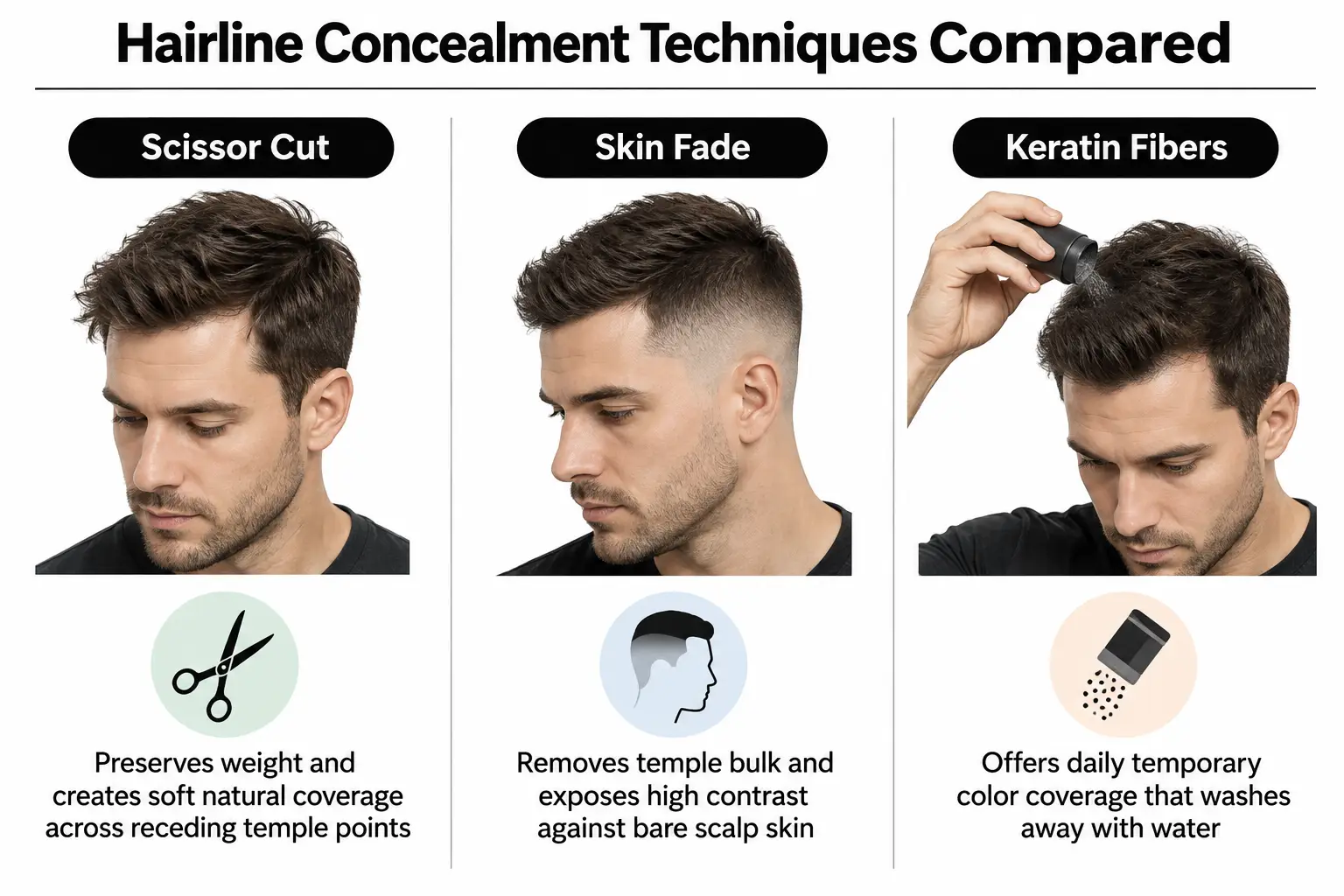
Quick fixes for an emerging widow's peak or receding temples can look quite different in daylight. Before choosing one, compare how a scissor cut and subtle color work against powders or a close fade. The difference affects both your daily routine and what you spend keeping the look.
| Grooming approach | Effort needed | Scalp visibility | How it grows out | Price range | Best fit |
|---|---|---|---|---|---|
| Tailored scissor cut with root shading | Little daily styling | Much less visible | 4 to 6 weeks of natural grow-out | $$ | Early temple thinning or a mature hairline |
| High skin fade with clippers | More daily styling | Strong contrast with exposed temples | 7 to 10 days before the line loses definition | $ | Thick crown hair with no temple recession |
| Keratin fiber powders | Daily application and upkeep | Covered until touched or wet | Rinses out each night | $ | Covering small gaps for an event |
| Even clipper buzz | Very little effort | Full hairline shape exposed | Needs weekly clipping at home | $ | Advanced thinning spread across the top |
Aggressive clipping almost always explains why a haircut only looks good on the first day. Removing too much supporting hair leaves the remaining sections with less to rest against. The shape may hold in the chair but become difficult to recreate at home.
Textured Crop, Soft Quiff, and Low-Contrast Toning Pathways
No single cut suits every changing hairline. Bone structure and forehead height help determine the direction of the cut. The thickness of each strand matters too, because it affects how much coverage the hair can give.
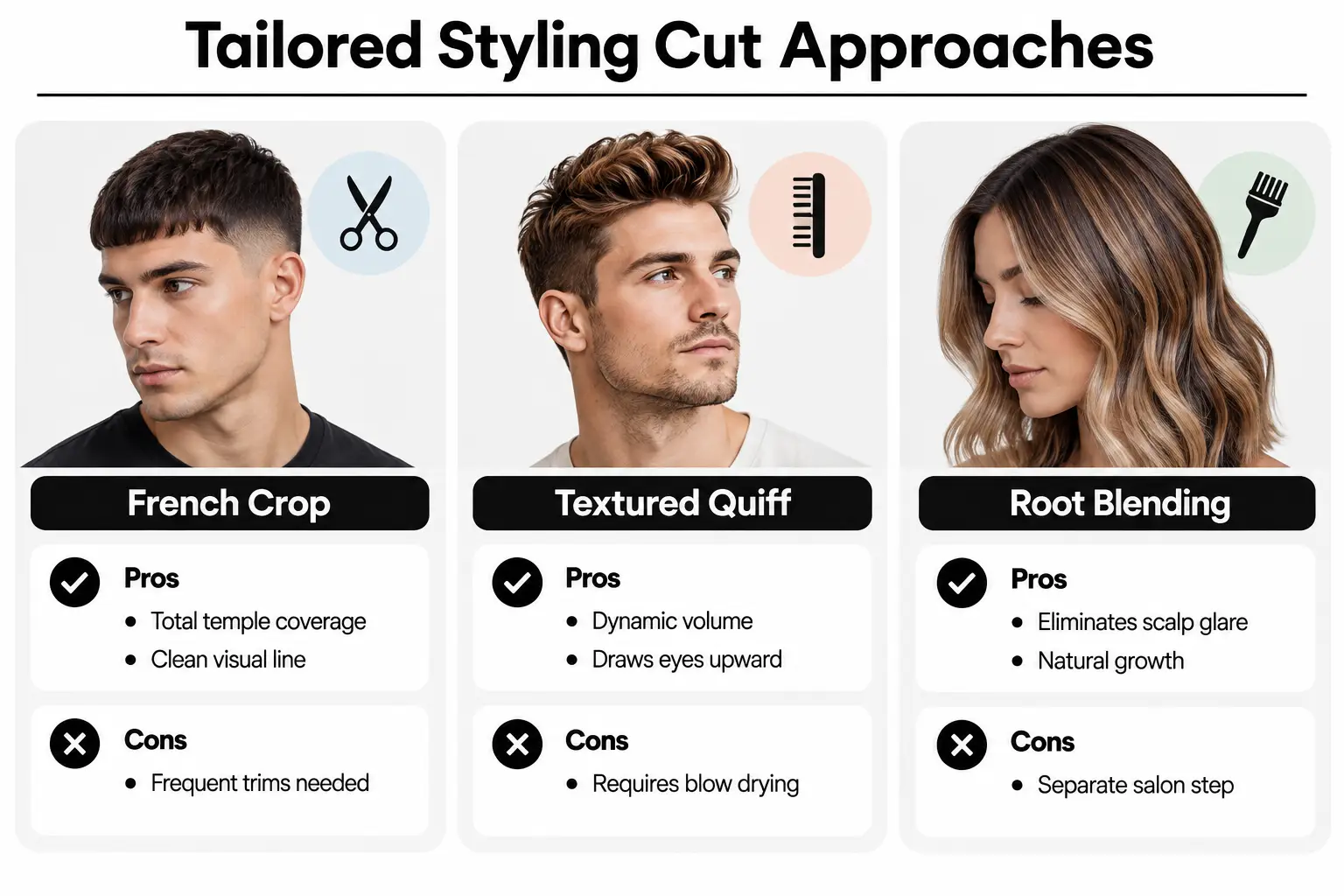
- Forward French crop: Hair falls downward in broken, blunt fringe layers that cover the receding corners. Pro: Covers temple dips fully while bringing attention to your cheekbones. Con: Needs small trims around the outline every four weeks.
- Diagonal textured quiff: Hair sweeps up and across the forehead rather than sitting symmetrically. Pro: The direction draws the eye away from thinner corners. Con: Needs a light sea salt spray before styling and a blow-dryer to keep its lift.
- Low-maintenance root blend: Soft lowlights or a gloss matched to your base add tone to blonde or gray temples. Pro: Reduces pale scalp glare under bright overhead lights. Con: Involves color work beyond the haircut itself.
A regular root touch-up or blending appointment keeps fading color from making thin spots stand out. Many executives who follow local executive haircut trends for 2025 use this combination. Careful scissor shaping gives the outline, while a little color depth supports the coverage.
Matching Hairline Patterns to the Right Blending Protocol
How much hair we remove depends on its natural density and how far the hairline has receded. These examples help set realistic expectations before you choose a service. They also show which daily habits support the cut and which can work against it.
| Hairline pattern | Suggested approach | What to avoid | Upkeep habit |
|---|---|---|---|
| Mild temple recession (Norwood II) | Textured forward crop with a point-cut fringe | Combing straight back with wet gel | Use dry matte paste for flexible separation |
| Thinning spread across the crown and temples | Scissor taper with lowlights in varied tones | Dark box dye that stains pale scalp skin | Book a custom gloss to add shine |
| High forehead with a strong widow's peak | Loose, scissor-cut side sweep | Sharp razor parts through sparse areas | Blow-dry on low heat with your fingers |
| Uneven growth on the sides | Off-center scissor shaping with crown texture | A high-and-tight cut that exposes the skin dip | Keep sideburns level with the middle of the ear |
Stylist's rule: Keep clippers below the curve above your temples once recession begins. Removing weight there takes away the hair that could cover the bare corners.
Research from the National Center for Biotechnology Information explains how hormone-related shrinking of follicles changes hair density across the scalp. Catching these changes early helps you avoid damaging combing habits. Our guide to signs of a haircut finished with cheap clippers also explains what to watch for.
Ongoing Upkeep and Home Styling Discipline
Scissor-cut hair keeps its proportions longer than a machine buzz because the tapered ends grow out at balanced rates. The shape still needs care between visits. A simple routine keeps it tidy without disturbing the length that covers your temples.
Key Milestones for Hairline Maintenance
- Each morning: Lightly dampen your hair with a spray bottle, then work in a pea-sized dab of matte clay. Use fingertips instead of a fine-tooth comb, which separates the groups of hair providing coverage.
- Week 3: Tidy the lower neckline and edges around the ears at home or during a quick salon visit. Leave the top and temple lengths alone.
- Week 5 to 6: Come back for a reshape. Discuss whether the cost of a toner refresh or root blend fits your upkeep budget and helps cover new growth lines.
- Every time you style: Skip heavy oils and petroleum pomades. Heavy waxes clump strands together, opening gaps that show the scalp underneath.
Common Questions on Disguising Receding Hairlines
Can a haircut really hide a receding hairline without styling products?
Yes, a well-shaped scissor cut uses the hair's own weight to cover sparse spots. Directional point-cutting helps those strands settle where they're needed without sticky products holding them down. A little matte paste helps in the wind, but the cut itself provides the basic coverage.
What is the typical custom salon hair color cost when blending graying temples?
Pricing depends on your hair's length and density, along with the type of color work. A gradually fading camouflage gloss differs from lowlights placed in several tones. Most tailored men's blending services sit in a moderate price range and can be booked with your regular scissor cut.
Why does a buzz cut often make receding hair look more obvious?
Buzzing leaves thick crown hair and finer temple hair at exactly the same length. Sparse temple hair can then look almost invisible against pale skin. With no longer strands left to soften the edge, the receding shape of the forehead becomes more obvious.
How far in advance should I get a tailored scissor cut before a major event?
Book roughly five to seven days before an important event or photo session. That gives freshly cut ends time to settle and move naturally. For formal occasions, our notes on timing your haircut before a wedding can help you plan the appointment.
Does point-cutting damage fragile or thinning hair?
No, sharp Japanese shears soften the tip without splitting the cuticle, the hair's outer layer. Dull clippers or aggressive razor work can instead tear at delicate strands. That leaves frayed ends and flyaways rather than the soft texture we're aiming for.
Planning Your Hairline Consultation in Westlake Village
At North Ranch Styling Lounge in Westlake Village, California, we look at how your hair grows before deciding what to remove. Face shape and the contrast between hair and scalp matter too. Rather than giving you a routine buzz that exposes the temples, we hand-cut a shape that brings those details into balance.
- Careful scissor work: Hand-cut layers keep useful weight and density around the temples.
- Clear color planning: We discuss color costs openly, including options for glossing that needs little upkeep.
- Quiet private lounge: You have time for attentive grooming without a rushed turnaround.
- Help with home styling: Practical product advice keeps your morning routine from becoming a twenty-minute task.
get in touch with our team to book your custom cut and styling consultation.