


To grow out a buzz cut without losing shape, keep the edges tidy and balance the growing hair with a beard trim. At the puffy, even two-inch stage, hair hides your head's natural outline. That extra bulk can make your face look too round or bottom-heavy.
A neat taper around your neck and temples draws attention away from the growing hair, so you still look groomed between cuts.
At our lounge in Westlake Village, California, we help men through this stage every week. There is no need to hide under a baseball cap for six months. Shaping your beard and hairline keeps the overall look clean and deliberate from the first week, even while the top is too short to style.
What's Inside This Guide
- Anatomy of the Awkward Stage and the Beard Anchor
- The Step-by-Step Strategic Grow-Out Method
- Guided Transition vs Total Neglect and Home Clipping
- Three Ways to Balance Growing Hair with Facial Structure
- Matching Your Skull Shape to Your Transitional Grooming Plan
- Maintenance Schedules to Prevent Unruly Growth
- Common Questions on Taming Awkward Hair Phases
- Plan Your Executive Transition in Westlake Village
Anatomy of the Awkward Stage and the Beard Anchor
After a buzz cut to the skin or one guard length, the hair grows at roughly the same rate across your head. Scalp hair gains about half an inch per month, as this overview of human hair growth explains. Even growth follows your skull's curve, creating a tennis-ball shape that rounds your face and exposes crown cowlicks.
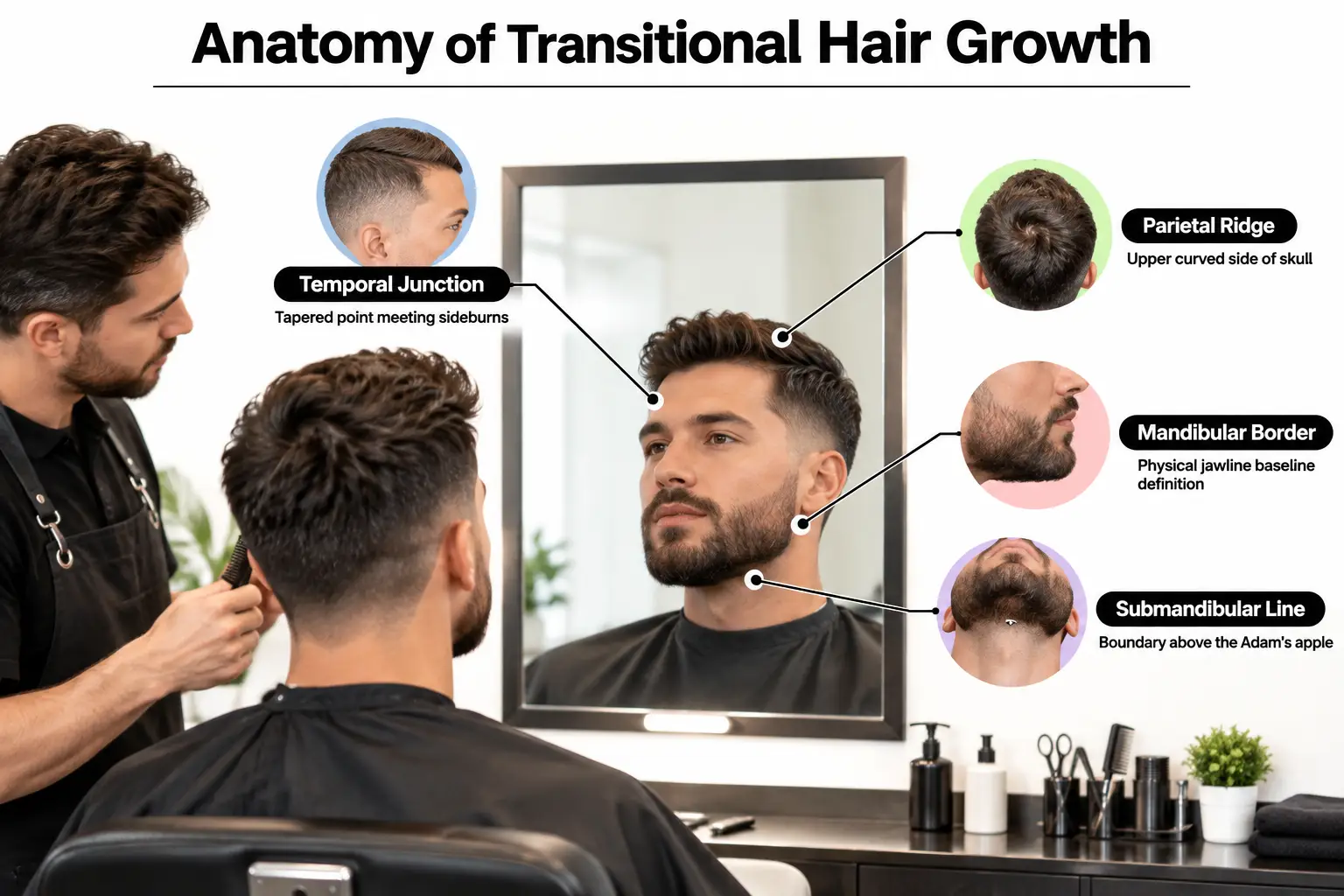
Four areas need attention to keep that rounded growth from taking over the shape of your face:
- The temple junction: This is where your temple hairline meets your sideburns. Thick hair at this point makes your head look wider, while a taper gives it a clearer outline.
- The parietal ridge: These are the upper curved sides of your skull, where hair tends to puff outward first. Light scissor work removes bulk without cutting the length on top.
- The jawbone border: This is the line along your jaw. A shaped beard creates a straight, dense edge here to balance the rounded growth on your head.
- The neckline: This boundary sits above the Adam's apple. An uneven line, or one that creeps too high, takes definition away from your profile while your hair grows.
Keeping the beard slightly fuller at the chin and closer on the cheeks draws the eye toward your jaw. Small changes matter here. Our guide to beard trimming mistakes shows how a misplaced line can change the balance of your whole face.
The Step-by-Step Strategic Grow-Out Method
Growing your hair into a style still means cutting certain areas along the way. Left alone, the back can become a scruffy mullet and the sideburns can flare within sixty days. We start by leaving the top length alone and cutting close fades around the ears and nape.
Video: Men: How to Grow Out Your Hair from a Buzz Cut (Nick Shell)
Next, your stylist sets the cheek lines and gradually blends the sideburns into the beard. Clippers that stop abruptly at the earlobe leave the beard looking separate from the haircut. Blending that small area connects the two without taking away the length you want to keep.
For anyone looking for professional beard shaping during a grow-out, this gradual blend is often the detail that makes the difference.
Finally, we remove bulk at the nape and set a clear bottom edge. The short top then looks like part of a planned taper, rather than hair that has simply been left to grow without a cut.
The Scissor Taper Detail Most Guys Overlook
Many quick walk-in shops run a flat clipper guard straight up the sides. That pass misses the hollows at your temples and the curve of the occipital bone, the bone at the back of your skull.
Shears let us shape the hair around your ears into a softer line that lasts longer. It avoids the bristly edge that can appear after four days. For a closer look at the finish, read about the signs of a haircut finished with cheap clippers.
Guided Transition vs Total Neglect and Home Clipping
Week eight is when most men who abandon a grow-out reach for their home clippers. By then, the sides stick out past the ears. Shaving everything off puts you back at the start, but leaving it untouched can make your hair look untidy at work.
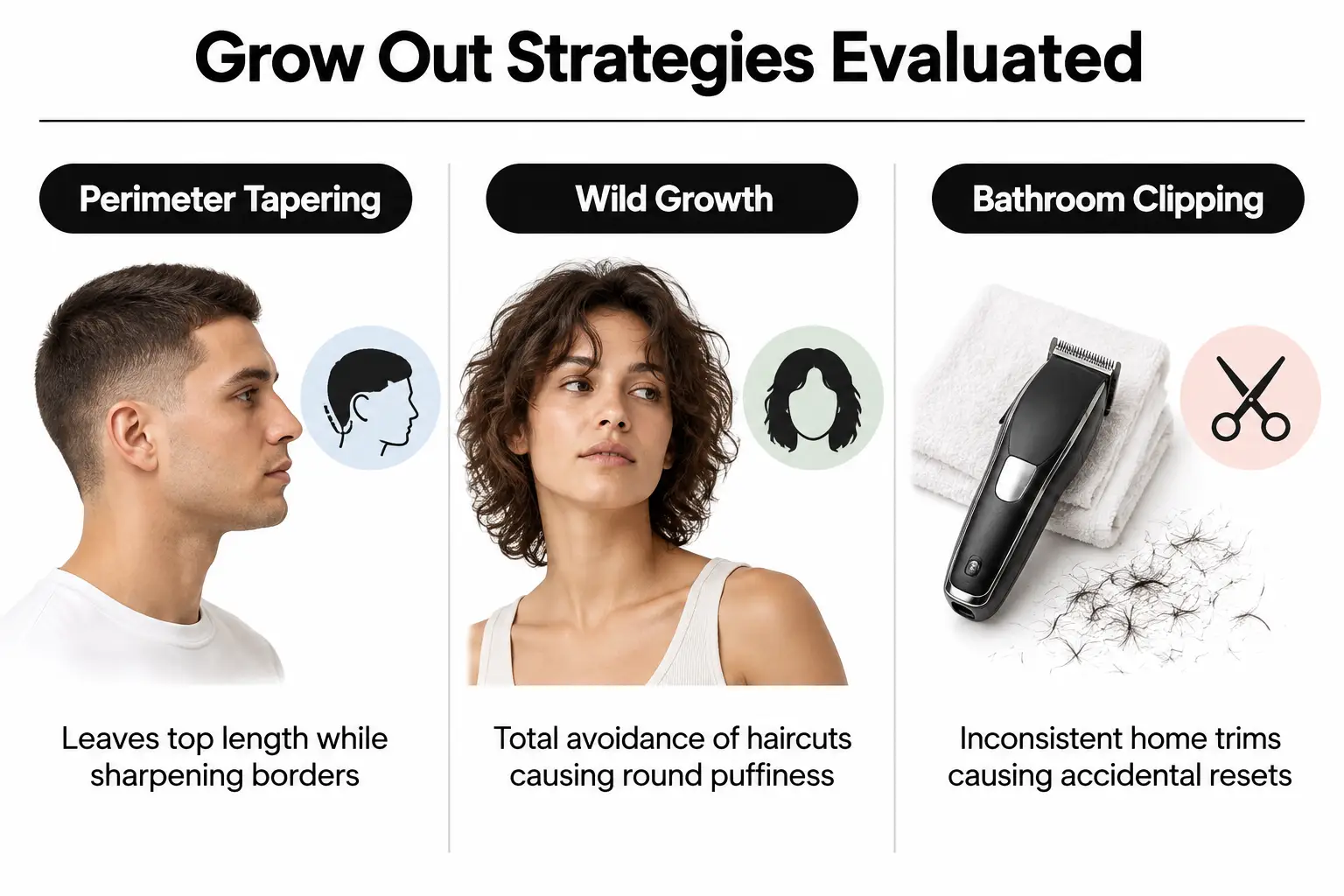
| Grow-out approach | Upkeep needed | Appearance at work | Time to a full style | Cost level |
|---|---|---|---|---|
| Professional edge tapering | Low (visit every 3-4 weeks) | Neat enough for meetings | Fastest (keeps top length) | $$ |
| Growing without trims | None (no haircuts) | Untidy (puffy, rounded shape) | Slower (needs more reshaping) | $ |
| Trimming at home | High (frequent corrections) | Uneven (risk of clipper gouges) | Risk of starting over | $ |
Regular shaping lets the crown and bangs gain the weight they need, while your beard is trimmed to suit your face. That balance makes the growing hair look like a planned crop. You keep making progress without looking overdue for a haircut.
Three Ways to Balance Growing Hair with Facial Structure
Your workplace and morning routine help determine which of these three approaches will suit you while the short growth gains length:
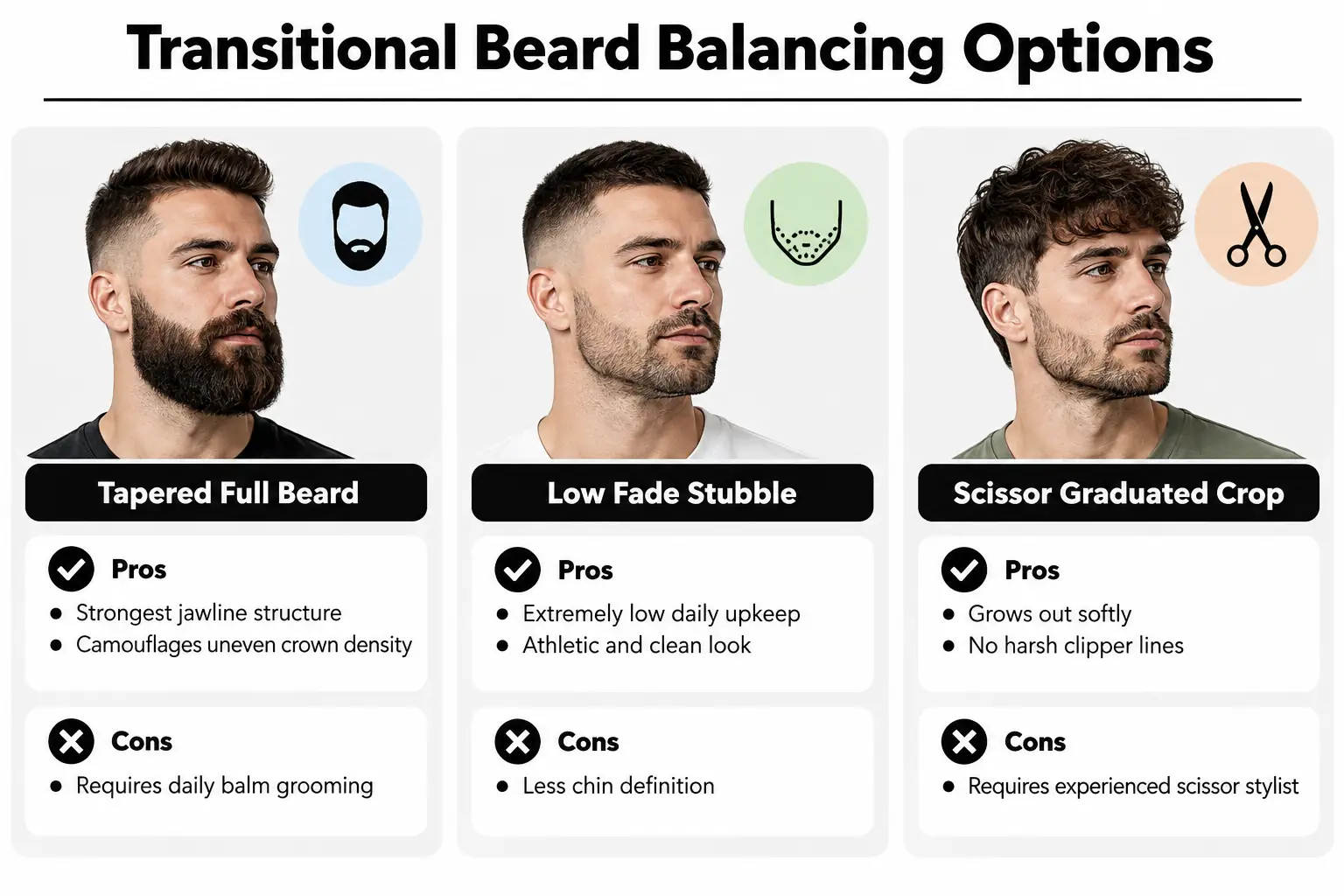
- Tapered edges with a full beard: Keep the sideburns and neck skin-tight every three weeks, while growing the beard full and square. Pro: Gives the lower face a stronger shape and balances patchy growth at the crown. Con: Needs regular beard balm and daily combing to keep it tidy.
- A low fade with heavy stubble: Fade the sides low and blend them into a three-day stubble outline along the jaw. Pro: Takes very little work in the morning and cools quickly during workouts. Con: Does less to disguise a softer chin that lacks definition.
- A scissor-shaped crop: Shape the sides with shears rather than clippers, and pair them with a crisp beard outline along the jaw. Pro: Grows out softly without harsh lines. Con: Needs a stylist who handles beard trims and knows how to build shape with scissors.
Matching Your Skull Shape to Your Transitional Grooming Plan
Head shape determines where to remove hair and where to leave the beard fuller. An oblong face looks longer with extra beard length below the chin. For a round jaw, close-trimmed cheeks and a square chin create angles that the growing scalp hair may be hiding.
| Head and face shape | Suggested hair and beard balance | Main risk to avoid | Ongoing care |
|---|---|---|---|
| Round with a soft jawline | Close skin taper at temples; long, boxy chin beard | Sideburns that flare outward | Brush facial hair downward daily |
| Square or angular | Soft scissor taper; rounded medium-length beard | Cheek points cut too sharply | Condition coarse stubble regularly |
| Oblong or narrow | Low drop fade; fuller beard sides and short chin | Too much length under the chin | Keep the neckline trimmed close |
Getting the shape right early saves months of frustration as the hair grows. Clients with rounder features often find our guide to beards for round faces and soft jaws useful. It explains how small changes to the cheek lines affect the way a face looks.
Our stylist's rule: Leave crown and bang length alone for the first ten weeks. Limit trimming to the neck and ear outlines, along with beard shaping.
Maintenance Schedules to Prevent Unruly Growth
Regular edge cleanups keep a grow-out manageable. Long gaps between visits let cowlicks split apart and sideburns grow over the ears, even when the top still needs more time.
Checkpoints for Your Transitional Routine
- Every 14 to 21 days: Book a beard lineup and trim within your budget, along with a temple taper to keep the outline of your haircut neat.
- Twice weekly at home: Use a light jojoba or argan oil to soothe the skin beneath your beard and keep the hair from becoming dry and bristly. The American Academy of Dermatology recommends this care for hair health.
- At week 12: Move to a full men's style cut. At this point, the top can become part of the haircut, with texture and a natural finish rather than a separate patch of growing hair.
For help keeping your skin calm between visits, schedule a consultation with us. Our advice on addressing chronic razor bumps with a straight razor also covers care for a neckline prone to redness.
Common Questions on Taming Awkward Hair Phases
Can a barber fix a beard neckline that was cut too high?
A neckline cut too high can be corrected, but it takes patience and a temporary change to the taper. The stylist tidies the lower stubble while the upper neck hair grows toward the crease at your Adam's apple. Allow two to three weeks for that growth.
How do I blend my sideburns into my hair while growing it out?
Ask for a gradual scissor or clipper taper that drops into the beard line. Rather than stopping at the ear, the blend connects the haircut to your facial hair. Our guide to blending beard lines into fades explains how we avoid that separated look in Westlake Village.
What is the average price for beard trim and shape services?
Standard shaping at quality salons and executive grooming lounges generally costs thirty to fifty dollars. Hot towels and razor-finished lines can affect the price. Check the shop's combined haircut and beard trim pricing, since booking them together usually gives the best value for regular upkeep.
Should I switch from clippers to scissors during my grow-out?
Scissors are a good choice once the top passes two inches. They let your stylist take out bulk without removing the length you spent months growing. This difference is covered in our comparison of a barbershop fade and a men's style cut.
Plan Your Executive Transition in Westlake Village
At our styling lounge, we shape growing hair and beards to suit your head, so the in-between stage still looks groomed. A simple cleanup may be enough. For facial hair that needs more care, our beard trim and treatment includes nourishing botanical oils and a finish ready for photos.
Before choosing someone to maintain your cut as it grows, look for these skills and a setting that suits you:
- Scissor skills: A stylist who can shape gradual blends with shears rather than relying on clippers alone.
- Beard planning: Cheek lines and neck edges placed to suit your bone structure, not a standard outline.
- A longer-term plan: Clear guidance for the next three months of growth instead of a one-visit fix.
- A private setting: A dedicated space where the focus stays on your personal style.
Book your appointment at North Ranch Styling Lounge to plan your next cleanup.