

An ingrown hair forms when a shaved or cut hair curls back or grows sideways into the skin. That trapped hair causes redness and tender, irritated bumps.
At North Ranch Styling Lounge, we help men choose haircuts that suit their face shape and keep their necklines tidy. If your jawline looks irritated, one of our first questions is what you shave with at home. Multi-blade cartridges are often behind recurring bumps and uneven stubble.
Cartridge razors get their close shave through a process called hysteresis: the first blade pulls the hair up, then later blades cut below the skin's surface. Skin feels smooth at first, but the cut hair slips back beneath the follicle opening, the small hole it grows through.
Coarse facial hair can pierce the inner wall of that opening as it grows back, rather than clearing the surface. That leaves recurring razor bumps along the lower neck and jaw.
What's Inside This Guide
- Anatomy of a Cartridge: The Mechanical Parts Behind the Pull
- The Lift-and-Cut Trap and the Growth Direction Detail Most Men Miss
- Cartridge Blades Compared to Traditional Safety and Straight Edge Tools
- Practical Ways to Edge and Clean Up Facial Hair Lines
- Matching Your Blade Choice to Skin Sensitivity and Hair Density
- Healing the Follicle: Immediate Post-Shave Care and Regrowth Checks
- Direct Answers on Shaving Irritation and Razor Bumps
- Book Professional Neckline and Beard Sculpting in Westlake Village
Anatomy of a Cartridge: The Mechanical Parts Behind the Pull
A shaving cartridge looks simple, but several small parts sit inside that plastic head. Each touches your skin or controls how the blades reach it. Looking at those parts helps explain why a quick morning shave can leave sensitive areas sore.
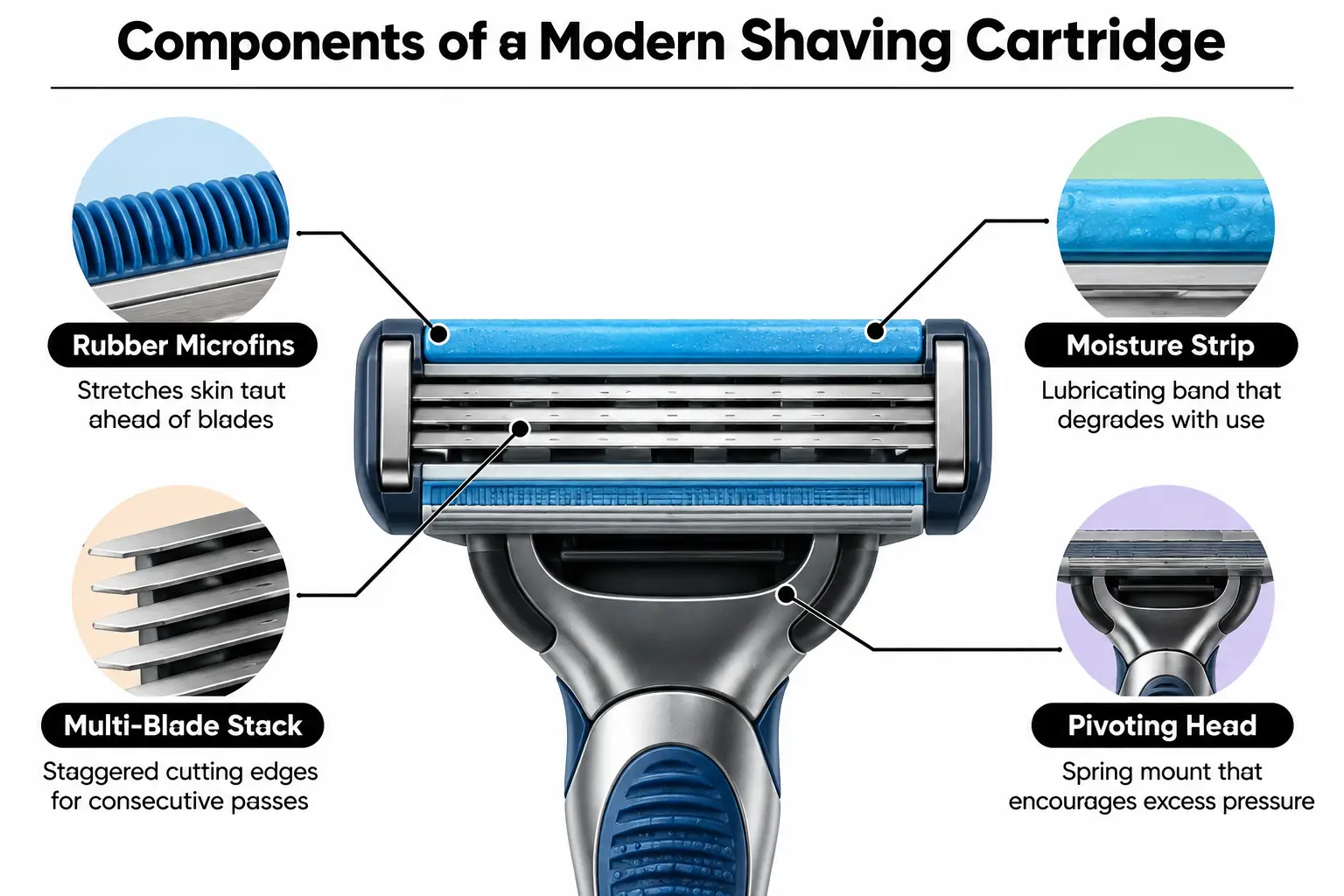
- Leading rubber microfins: These flexible ridges pull the skin tight just before the blades touch it.
- Multi-blade stack: Three to six thin blades sit at increasingly steep angles, making several cuts in one stroke.
- Lubricating moisture strip: This water-activated band contains polyethylene oxide, a lubricant that wears away unevenly with use.
- Pivoting plastic head: A spring-loaded mount follows the curves of your face. That movement often encourages you to press harder than needed.
Dragging three to five steel edges over your face means more than one blade touches each spot. With a five-blade cartridge, three passes put fifteen blade edges across the same neck skin. Those repeated passes add friction, even when the shave feels quick.
Clinical guidance from the American Academy of Dermatology recommends reducing blade passes over delicate skin to lower the risk of pseudofolliculitis barbae, the medical name for razor bumps.
The Lift-and-Cut Trap and the Growth Direction Detail Most Men Miss
Cartridge blades work on a scale you cannot see in the mirror. A blunter leading blade catches the hair and pulls it slightly out of its follicle. Before it springs back, the next blades cut it at an angle. Released from that pull, the pointed tip slips beneath the skin's top layer.
Video: Dr. Daniel Sugai explains shaving techniques to avoid razor burn and ingrown hair.
Naturally wavy or curly hair can bend as that sharp tip grows. Coarse hair can do the same, pushing into nearby skin instead of out through the pore. Your immune system sees the trapped hair as a foreign object and sends white blood cells to contain it. The resulting sore, inflamed bump can look like an infected blemish.
The Swirling Grain Pattern Along Lower Necklines
Neck grain is easy to overlook. Hair rarely grows in a neat line straight down toward your collarbone. Across the neck, it often runs sideways or toward the ears, with circular growth patterns near the Adam's apple.
Sweeping a wide cartridge head straight up or down means shaving against the grain across much of your neck. Our comparison of cartridges and single blades explains how that choice affects sensitive skin.
During a neckline cleanup, we can help map those awkward growth patterns. Knowing which way each patch grows helps you avoid cutting hair below the skin.
Cartridge Blades Compared to Traditional Safety and Straight Edge Tools
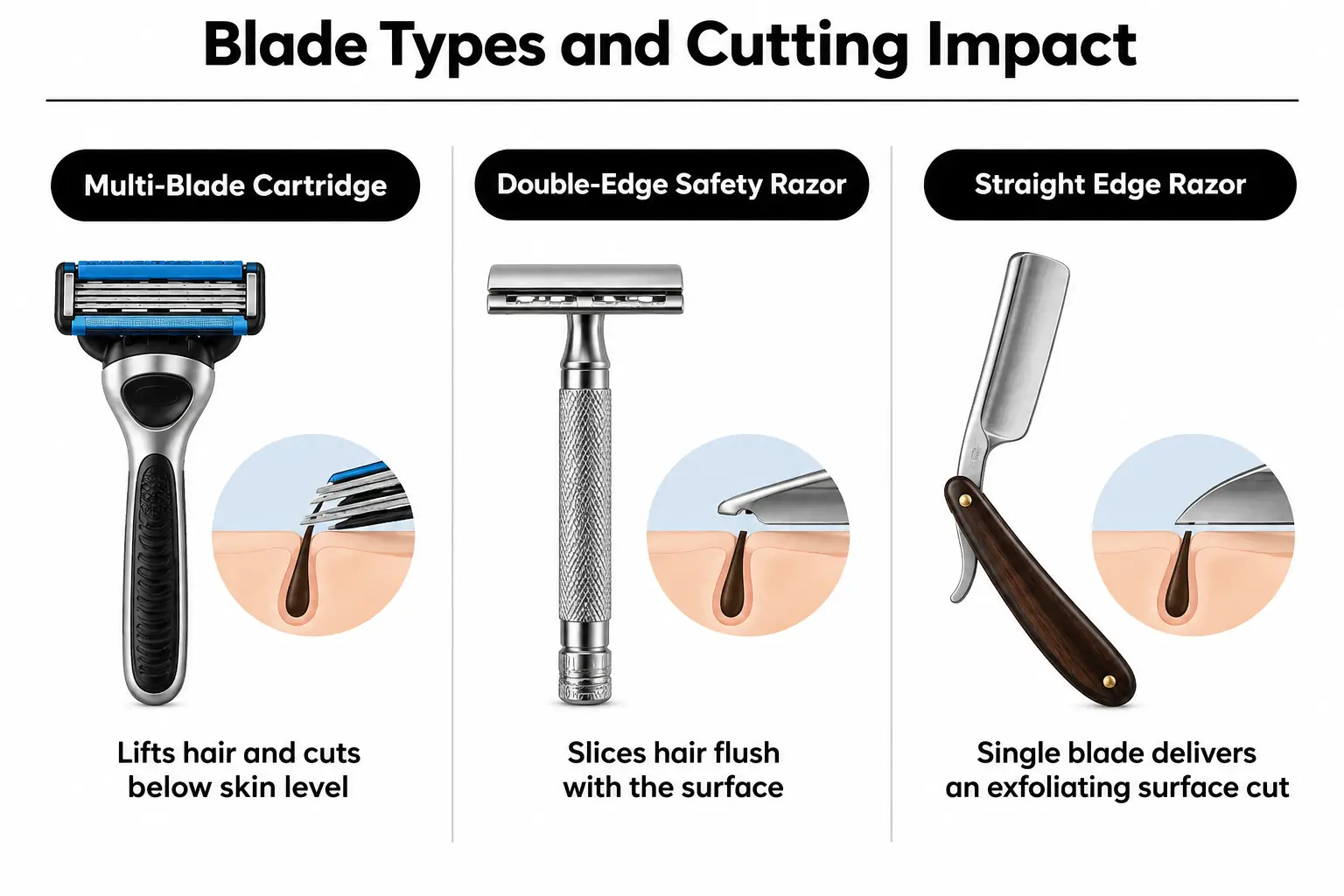
Repeated neck redness and missed patches around the jaw are reasons to look at how your razor cuts. Cartridges and single-edge tools treat the hair differently. This table compares the effort each needs, along with where it cuts and the irritation risk.
| Shaving option | Daily effort | Skin irritation risk | Where it cuts | Cost tier | Best fit |
|---|---|---|---|---|---|
| Multi-blade cartridge | Very low | High | Below the skin's surface | $$$ | Fine, straight hair with tough skin |
| Double-edge safety razor | Moderate | Low | Level with the skin's surface | $ | Coarse or curly stubble; daily shaving |
| Barber straight razor | High (professional service) | Very low | Surface cut that also removes dead skin | $$ | Grooming before events and sensitive necks |
| Foil electric shaver | Low | Low to moderate | Just above the surface | $$ | Frequent travel and quick morning shaves |
Safety razors and straight blades cut hair at the surface rather than pulling it outward first. Keeping the strand level with the pore opening lets it grow out naturally, rather than into the skin beside it.
Practical Ways to Edge and Clean Up Facial Hair Lines
Blending a beard into sideburns needs a tool that lets you see where you are cutting. The same applies to sharp cheek lines. Your choice affects both the shape you leave behind and how your skin feels afterward:
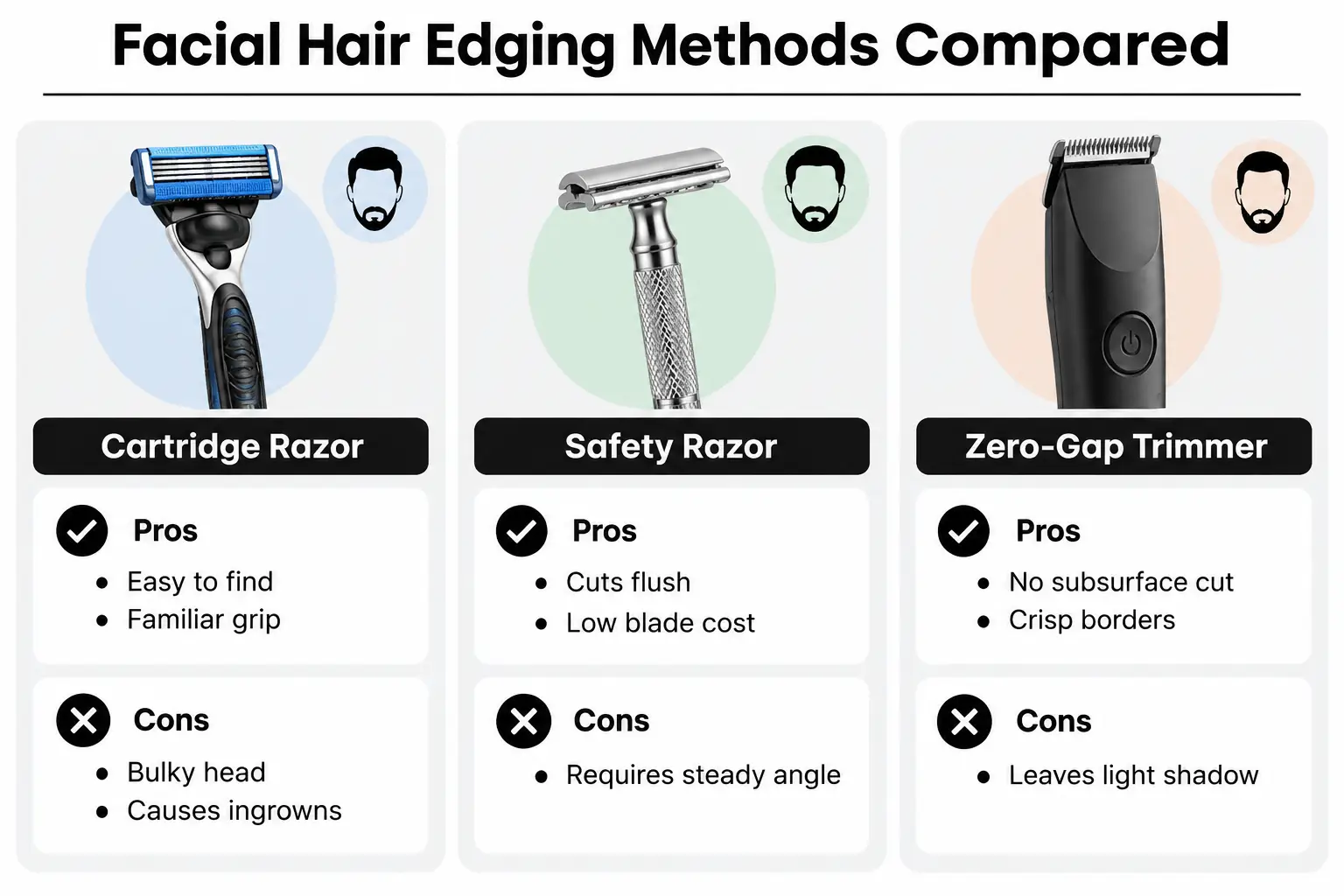
- Multi-blade cartridges: These work quickly across broad, flat cheeks. Their bulky heads hide the blade edge, though, making it easy to trim too far and leave uneven lines.
- Single-blade double-edge razors: Replacement blades cost little and cut cleanly at the skin's surface. You need a steady hand and a fixed 30-degree angle to avoid small nicks.
- Zero-gap professional trimmers: Closely aligned blades define necklines and blend them into modern haircuts without cutting below the skin. They leave a faint stubble shadow rather than a completely smooth finish.
- Hot lather straight razor services: These give precise beard edges. Warm steam towels and protective oils prepare the skin so the blade cuts without tugging while removing dead surface cells.
Crooked necklines can make your jaw look less defined, even with an otherwise tidy beard. A professional cleanup establishes the border. Following a shaving routine suited to coarse facial hair makes that shape easier to maintain at home.
Matching Your Blade Choice to Skin Sensitivity and Hair Density
Dense, wiry stubble creates more friction than soft facial hair. Skin tolerance matters too: a quick shave that suits one person may leave another with a sore neck. Match your tool to the growth you have and the finish you need.
| Grooming situation | Recommended option | Key risk to avoid | What to keep doing |
|---|---|---|---|
| Dense, curly neck hair with painful red bumps | Single-blade safety razor or zero-gap trimmer | Avoid upward strokes that go against your neck grain | Use a gentle glycerin pre-shave wash |
| An important event, such as a wedding or executive photoshoot | Professional straight razor cleanup 24 hours before | Skip a brand-new multi-blade cartridge on the morning of the shoot | Apply cold compresses right after edging |
| Blending beard borders into a modern taper fade | Detail clippers followed by single-blade edging | Avoid setting the neckline too high under your chin | Follow the shape of your natural jawline |
| Fine facial hair with skin that is not sensitive | A good pivot cartridge with fresh blades | Do not keep dull cartridges beyond five shaves | Rinse thoroughly with cold water to close pores |
Our practical rule: Stop as soon as a blade pulls at coarse hair instead of cutting it. A dull blade yanks the hair at an awkward angle, setting it up to grow inward over the next 48 hours.
At North Ranch Styling Lounge, we see clients who shave their beard neckline too high while chasing a closer finish with cartridges. We look at your face shape before setting that line. The aim is to define your jaw, not trim away the hair that gives it shape.
Healing the Follicle: Immediate Post-Shave Care and Regrowth Checks
After shaving, keep the follicle openings clear while the hair works back to the surface over the next three to five days.
Your 72-Hour Post-Shave Checklist
- Hour 0 (right away): Splash your skin with cool water to calm redness. Pat it dry with a clean towel rather than rubbing hard.
- Hour 1: Apply an alcohol-free balm with a soothing ingredient such as witch hazel, aloe vera, or niacinamide to calm hot skin.
- Hour 24: Check your neck for small red spots. For a hair trapped just beneath the surface, hold a warm compress on it for five minutes. Never squeeze or dig with unsterilized tweezers.
- Hour 48: Use a mild salicylic acid wash to gently loosen dead skin cells that block pore openings.
Between salon visits, our guide to beard styles for round faces and soft jaws can help you keep balanced proportions. It explains how the lines you leave affect your face shape. For the hair above your beard, read our advice on choosing a flattering haircut so both work together.
Direct Answers on Shaving Irritation and Razor Bumps
Do multi blade razors cause ingrown hairs more than single blades?
Yes. Their lift-and-cut design pulls hair tight before cutting below the skin's surface, which increases ingrown hairs. Once released, the cut end slips beneath the pore opening and can curl into nearby skin. Single-blade tools cut level with the surface instead, so the hair does not retract beneath it in the same way.
How do I know if a bump is an ingrown hair or folliculitis?
An ingrown hair irritates the skin when its curved tip grows into it. It leaves a firm red bump, often with a dark hair visible beneath the surface. Folliculitis is a follicle infection caused by bacteria or fungi, with clusters of small white-headed bumps that itch or hurt. See a doctor or dermatologist if bumps spread quickly or ooze.
Can I fix ingrown hairs without giving up clean-shaven cheeks?
Clean-shaven cheeks are still possible with a single-blade double-edge safety razor. Shave only in the direction your hair grows. Warm water softens the skin before shaving, and a lubricating cream gives the blade enough glide to cut without pushing hair below the surface.
For help setting beard lines that suit your bone structure, book a shaping session with us.
Why does my neck get razor burn even when I use fresh cartridge blades?
Fresh cartridges cut closer than worn ones, so hair can retract farther beneath the skin. Neck skin is also thinner and softer than cheek skin. Five closely spaced blades scrape that sensitive area repeatedly, leaving tiny abrasions. Fewer blade passes and a lighter hand reduce that wear on your neck.
Book Professional Neckline and Beard Sculpting in Westlake Village
Persistent bumps and uneven stubble are reasons to have a professional check your beard borders and growth direction. At North Ranch Styling Lounge in Westlake Village, California, we shape facial hair around those patterns and your bone structure. Our neckline work gives you a clean finish without the irritation caused by drugstore cartridges.
Before your next home shave, check these details rather than reaching straight for another cartridge:
- Growth grain check: Check which way the stubble grows across each part of your throat, not just the center.
- Proper neck height: Keep your beard neckline two fingers above your Adam's apple rather than high along your jaw.
- Blade count: Check that you are using a precise single-pass blade rather than dragging five blades over the same spot.
- Haircut integration: Look at how your beard joins your sideburns and the taper at your temples.
Planning for photos or an event? Read our advice on timing your haircut before a wedding and keeping it looking good after your visit. For a neckline cleanup shaped around your growth pattern, contact North Ranch Styling Lounge to book your appointment.